

DieTees Herb Encyclopedia
Oolong Tea – Benefits, Preparation & Tips for the Perfect Cup
Oct
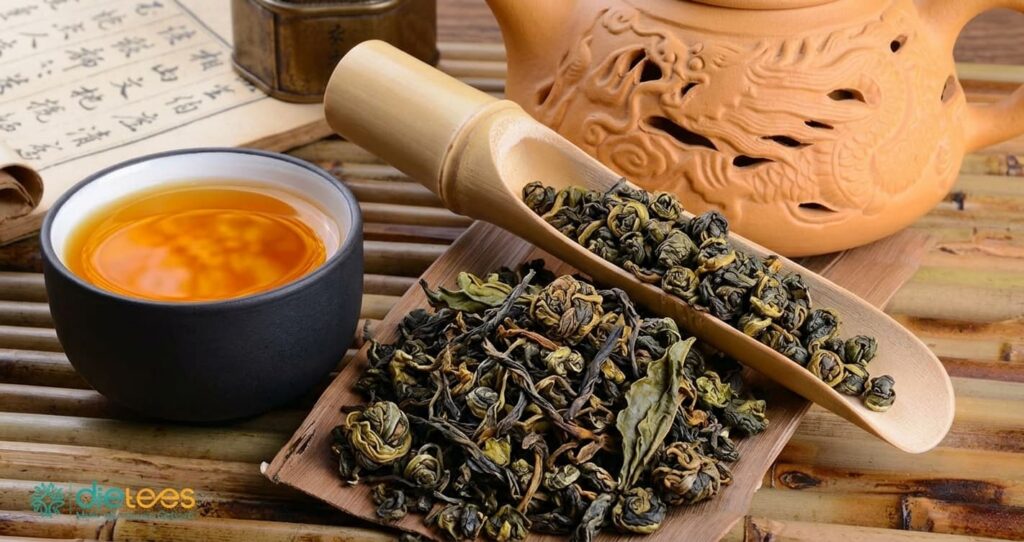
Complex aromas, centuries-old tradition and a unique interplay of freshness and depth – oolong tea is a world of its own in the universe of tea varieties. In this dietees guide, you'll learn everything important: what oolong actually is, how it differs from green and black tea, how to prepare it, which varieties exist – including the famous Milky Oolong – and why premium oolongs can be infused 3 to 5 times.
Oolong Tee – ein halbfermentierter Klassiker
Oolong (Chinese: Wū Lóng, “Black Dragon”) is made from the leaves of the same tea plant as green, white and black tea: Camellia sinensis. What sets oolong apart is its semi-fermented character – after harvest, the tea leaves are partially oxidised, similar to black tea, but the process is stopped early. Depending on tradition, the oxidation level lies between 10 and 80 percent.
Oolong's homeland is China – especially the province of Fujian (Anxi, Wuyi Mountains) – as well as Taiwan (Alishan, Lishan, Dong Ding). In the 19th and 20th centuries, oolong cultivation was also established in Java (Indonesia) . Today, oolong plantations can be found in many highland regions of Asia. The diversity is enormous: from light-green, floral-fresh Pouchong style to dark, roasted Wuyi style with hints of minerals and toasted aromas.
Geschmacksprofil & Charakter
Oolong tea offers probably the widest flavour spectrum of all tea types. Depending on the degree of oxidation and processing, it can taste completely different:
Niedrige Oxidation (10–30 %)
Light Green Oolongs – close to green tea. Examples: Pouchong, Jade Oolong, Ali Shan.
Aroma: floral, fresh, with honey and orchid notes
Cup colour: pale, yellow-green
Hohe Oxidation (50–80 %)
Dark Oolongs – close to black tea. Examples: Da Hong Pao, Wuyi Yan Cha, Tieguanyin.
Aroma: roasted, mineral, with fruity and woody notes
Cup colour: amber to dark orange
This versatility makes oolong the perfect choice for tea lovers who value complexity and discovery – every variety is a small journey into its own world of aroma.
Oolong Tee Koffein – wie viel ist drin?
Oolong tea contains caffeine – a natural component of the tea plant. The content is typically between green tea and black tea:
- Green tea: approx. 20–30 mg per cup (250 ml)
- Oolong tea: approx. 30–50 mg per cup
- Black tea: approx. 40–60 mg per cup
- Coffee (for comparison): approx. 80–100 mg per cup
The exact amount depends on the degree of oxidation, the choice of variety and the steeping time . The longer the tea steeps, the more caffeine ends up in the cup. The amino acid L-theanine is also present – it is characteristic of the tea plant.
Oolong Tee Zubereitung Schritt für Schritt
Unlike very delicate green tea, oolong can tolerate somewhat hotter water – good to know. Water temperature and steeping time depend on the degree of oxidation.
Klassische Zubereitung
- Use 1 tsp oolong per 250 ml
- Let the water cool to 90–95 °C
- 2–3 minutes steep (1st infusion)
- Strain and enjoy at leisure
Mehrere Aufgüsse (Gongfu-Stil)
Premium oolongs can be infused 3–5 times:
- 1st infusion: 2–3 min. – fresh, floral
- 2nd infusion: 1–2 min. – balanced
- 3rd infusion: 2–3 min. – deeper, rounder
- 4th–5th infusion: 4–5 min. – gentle finish
Tip: For the full aroma to unfold, glass or Yixing teapots are particularly well suited. You will find matching accessories in our Tea Accessories category.
Milky Oolong – Geschmack und Charakter
Milky Oolong is a special variant of oolong tea, known for its characteristic creamy, buttery aroma . The name comes from its milky-sweet taste – even though the tea itself contains no milk.
The creamy note results from a combination of two factors:
- Variety selection: Certain tea plant varieties in Taiwan and China naturally carry a soft, creamy-buttery aroma component.
- Processing: Some producers use a special drying or flavouring method, treating the leaves with gentle warmth.
The result: a particularly smooth, full-bodied oolong that often wins over even tea beginners right away. Try our China Milky Oolong – a typical representative of this style, with a balanced creamy-floral profile.
Oolong als Begleiter bewusster Ernährung
In many Asian cultures, oolong tea traditionally accompanies meals or is enjoyed between them. For generations, it has been drunk as a companion to mindful eating – not as a miracle cure, but as an enjoyable part of a mindful lifestyle.
Anyone who follows a mindful diet particularly values oolong for:
- Aroma variety without sugar – enjoyed pure, calorie-free
- A hydrating drink with flavour – ideal as an alternative to soft drinks
- A tea ritual instead of a snack reflex – a mindful pause in your day
- Multiple infusions – one serving of leaves is enough for several cups
Note: Oolong tea is a food, not a medicine. Specific health claims are reserved for medicinal products and should be addressed by doctors or pharmacists.
Beliebte Oolong-Sorten bei dietees
We offer a carefully curated selection of oolong teas from various growing regions:
China Milky Oolong
Creamy and buttery in aroma, with a milky-sweet note. A particularly popular choice for beginners.
Bio China Jade Oolong
A light green oolong from China with a floral, fresh profile – fruity and harmonious.
Bio Java Jade Oolong
From Indonesia (Java) – with an aromatic, fruity character and gentle notes.
Inhaltsstoffe – Catechine, L-Theanin, Polyphenole
Oolong tea contains the typical natural plant compounds of the tea plant. Important note: oolong tea is a food, not a medicine.
- Catechins – secondary plant compounds responsible for the slightly bitter flavour profile
- L-theanine – an amino acid that contributes to the characteristic umami note
- Polyphenols & Theaflavins – formed during oxidation and shape the aroma and cup colour
- Caffeine – approx. 30–50 mg per cup (250 ml)
- Minerals – round out the natural profile
These components should primarily be understood as flavour- and aroma-shaping components . If you have questions about specific ingredients, please consult scientific sources or a medical professional.
Häufige Fragen zu Oolong-Tee (FAQ)
The main difference is the oxidation: green tea is heated immediately after harvest (steamed or pan-fired), so no oxidation takes place. Black tea is fully oxidised. Oolong sits in between – semi-fermented, with 10–80% oxidation. More in our Green Tea Guide.
Oolong tea contains approx. 30–50 mg of caffeine per cup (250 ml). This places it between green tea (~20–30 mg) and black tea (~40–60 mg). Longer steeping increases the caffeine content.
Let the water cool to 90–95 °C, use 1 tsp per 250 ml, and steep for 2–3 minutes. Premium oolongs can be infused 3–5 times – each infusion brings a new flavour profile.
Milky Oolong is a lightly oxidised oolong with a characteristic creamy, buttery aroma. The milky-sweet taste comes from the choice of variety and/or special processing – milk is not included. A particularly popular choice for beginners.
Oolong tea contains caffeine. During pregnancy and breastfeeding, consumption should be reduced or discussed with a doctor. 1–2 cups a day are usually considered safe – if in doubt, seek individual advice.
Stored airtight and away from light in a tea tin, oolong tea keeps for about 18–24 months – somewhat longer than green tea, since oxidation gives the tea more stability. Store cool and dry – not in the fridge.
Yes – it is even recommended. Premium oolongs often only reveal their full spectrum over 3–5 infusions. Each infusion brings new aroma nuances: the first infusions show freshness and floral notes, while later ones reveal deeper, fuller-bodied notes.
Discover our selection of oolong teas in our Oolong category , or browse our full range of organic teas.
Note: The content of this article is for general information purposes only and does not replace medical advice, diagnosis or treatment. If you have health concerns, please consult a doctor. Oolong tea is a food, not a medicine.
You might also like
Discover in the shop: Oolong tea view →