

General
Greek Mountain Tea: Effects, Studies & How to Prepare Sideritis Tea
Jun
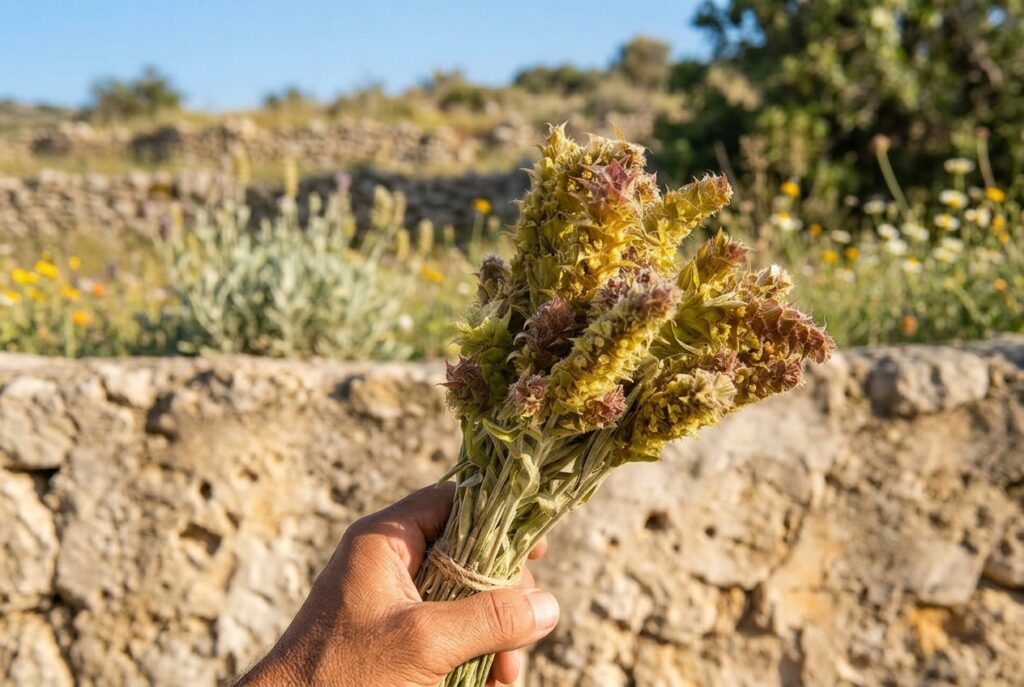
Greek Mountain Tea – lovingly known in Greece as “tsai tou vounou”, the tea of the mountains – one of the most traditional herbal drinks in the Mediterranean. It is made using the plant Sideritis, which grows wild in the Greek highlands. Mild, Mediterranean and naturally caffeine-free: in this article you'll discover what the effects of Greek mountain tea are, what the research says about it, how to prepare it properly – and what to look out for when buying it.

Organic Greek Mountain Tea
100% organic Sideritis (Sideritis scardica) from the Greek highlands – mild and aromatic, Mediterranean and naturally caffeine-free. No flavourings, no additives.
View productWhat is Greek mountain tea (Sideritis)?
Greek mountain tea belongs botanically to the genus Sideritis from the mint family (Lamiaceae). Traditionally, the entire above-ground part of the plant is used – stem, leaves and the characteristic lemon-yellow flowers. The name derives from the Greek word “sideros” (iron); in German, the plant is therefore also known as Griechisches Eisenkraut, Hirtentee or Gliedkraut
The genus comprises around 150 species. Particularly prized for its flavour is Sideritis scardica – it's exactly this variety that goes into our Organic Greek Mountain Tea. You can read more about the plant in our articles Tea with Sideritis and Tea from Greece.
Origin: Wild-grown in the Greek highlands
Sideritis thrives in barren, sun-drenched locations in mountain ranges such as Olympus, Pindos, Pelion or on Crete – usually from 700 metres above sea level. These harsh conditions cause the plant to develop its characteristic aromatic and plant compounds. It is harvested by hand during flowering, then gently air-dried and processed in its whole, unprocessed form.
Greek Mountain Tea: Effects & What Research Says
Important to know upfront: Greek mountain tea is a food, not a medicine. In the Balkans, it has been valued for centuries as a fortifying, relaxing drink. The European Committee on Herbal Medicinal Products (HMPC) has classified Sideritis as a traditional herbal medicinal product , and recognises its use for cold-related coughs and mild digestive complaints, based on long-standing traditional experience.
Antioxidant & Anti-inflammatory
The antioxidant properties are supported by numerous studies. In one cell study, a Sideritis extract showed antioxidant activity comparable to an extract from the classic tea plant (Camellia sinensis). This is attributed to the polyphenols, flavonoids and essential oils it contains.
Digestion & Stomach
In animal studies, Sideritis extracts showed stomach-protecting effects. Traditionally, the tea is used for mild digestive complaints – one of the two areas explicitly recognised by the HMPC.
Cognitive Performance & Mood
Sideritis has attracted particular attention for its possible effects on the brain. In a randomised, placebo-controlled study of 155 healthy people (aged 50–70), a standardised Sideritis extract improved cognitive performance versus placebo after four weeks. Other studies suggest an influence on the neurotransmitters serotonin, dopamine and noradrenaline.
What Does Greek Mountain Tea Taste Like?
The taste is mild yet distinctive – less floral than chamomile, less fresh than peppermint, but with a warm, Mediterranean depth:
Preparation: The Classic Hot Brew
Greek mountain tea is made from robust plant parts, so it can steep for a little longer. This allows its mild aroma to develop fully. The plant parts can be infused several times – with the second infusion, the flavour often becomes even more balanced.
Buying Greek Mountain Tea: What to Look Out For
When buying, quality determines the taste and purity of the infusion. These criteria will help you choose:
| Criterion | What to look for |
|---|---|
| Exact species | Actually Sideritis scardica – not just “mountain tea” |
| Organic quality | EU organic seal (e.g. DE-ÖKO-039), no pesticides & no GMOs |
| Whole plant | Stems, leaves & flowers – stem content not excessively high |
| Origin | Wild-grown from the Greek highlands |
| Drying | Gentle air-drying preserves the essential oils |
🌿 Quality Check
- Exact species
- Sideritis scardica – not just “mountain tea”
- Organic quality
- EU organic seal (e.g. DE-ÖKO-039)
- Whole plant
- Stems, leaves & flowers
- Origin
- Wild-grown from the Greek highlands
- Drying
- Gently air-dried
Our Organic Greek Mountain Tea meets all of these criteria: 100% single-variety organic Sideritis, wild-grown from the Greek highlands, EU-organic certified (DE-ÖKO-039), with no flavourings or additives – free shipping within Germany from €32.00.
How to Keep the Aroma Fresh
Frequently Asked Questions (FAQ)
Is Greek Mountain Tea Caffeine-Free?
Yes. As a pure herbal infusion made from Sideritis, the tea is naturally caffeine-free and can be enjoyed at any time of day – even in the evening.
How Long Should Greek Mountain Tea Steep?
For the classic hot infusion, 8–10 minutes at 95–100 °C. For the second infusion, the steeping time can be extended slightly to 10–12 minutes.
Can Sideritis Tea Be Infused Multiple Times?
Yes, the plant parts can be infused 2–3 times. The second infusion often develops a softer, more balanced flavour.
Does Greek Mountain Tea Have Proven Effects?
Antioxidant and anti-inflammatory properties are well documented. The HMPC recognises the traditional use for cold-related coughs and mild digestive complaints. Effects on cognitive performance are being researched but have not yet been conclusively confirmed. The tea is a food, not a medicine.
What Does Greek Mountain Tea Taste Like?
Mild, gently hay-like and slightly sweet, with a warm, Mediterranean depth. Less floral than chamomile, less fresh than peppermint – round and smooth on the palate.
Can I Drink the Tea During Pregnancy and Breastfeeding?
There is insufficient research on this. The HMPC therefore does not recommend use during these periods. If in doubt, please consult a doctor.
Note: The content of this article is for general information purposes only and does not replace medical advice, diagnosis or treatment. Greek mountain tea is a food, not a medicine. Pregnant and breastfeeding women, people with pre-existing conditions, and those taking medication should consult a doctor before regular consumption.
You might also like
Discover in the shop: Black tea view →