
DieTees Herb Encyclopedia
Ginger: Nature’s Power in Your Teacup
Oct
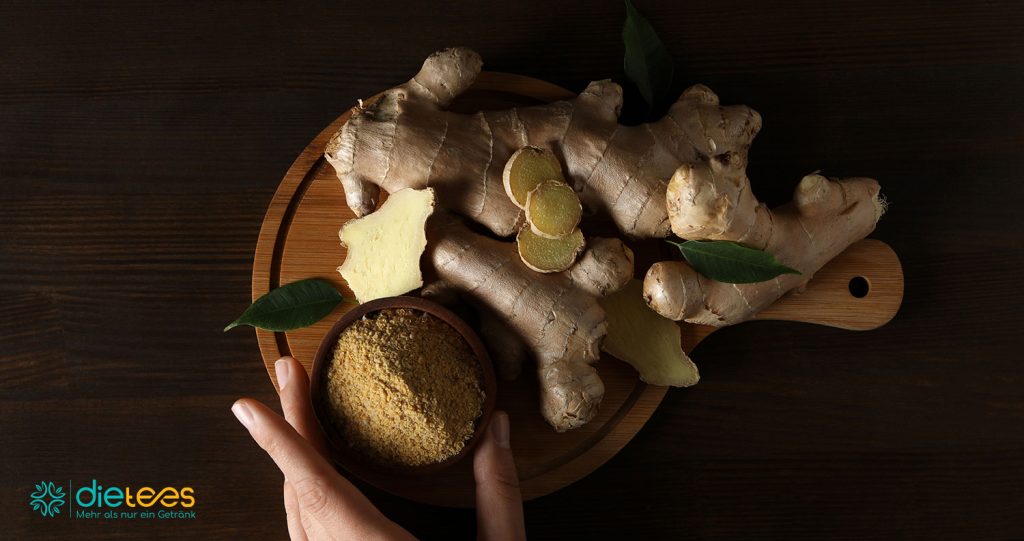
Ginger (Zingiber officinale) impresses with its characteristic sharpness and its fresh, slightly lemony note – one of the most popular ingredients in modern tea blends.
The aromatic root originally comes from Southeast Asia and is prized worldwide today. In tea blends, ginger provides depth, warmth and a vibrant flavour profile.
Origin and character
The ginger plant grows in tropical and subtropical regions such as India, China or Indonesia. The rhizome is used – the underground root known for its intense aroma.
Flavour and aroma
- Spicy-hot: with a pleasant intensity
- Fresh: slightly lemony nuances
- Versatile to combine: pairs with lemon, mint, honey or cinnamon
Ginger brings structure and vibrancy to herbal and fruit teas.
Natural constituents
Ginger contains, among other things:
- essential oils
- pungent plant compounds such as gingerols
- secondary plant compounds
These constituents contribute to the root's characteristic aroma.
Note: ginger is a food ingredient and not a medicinal product.
Popular combinations
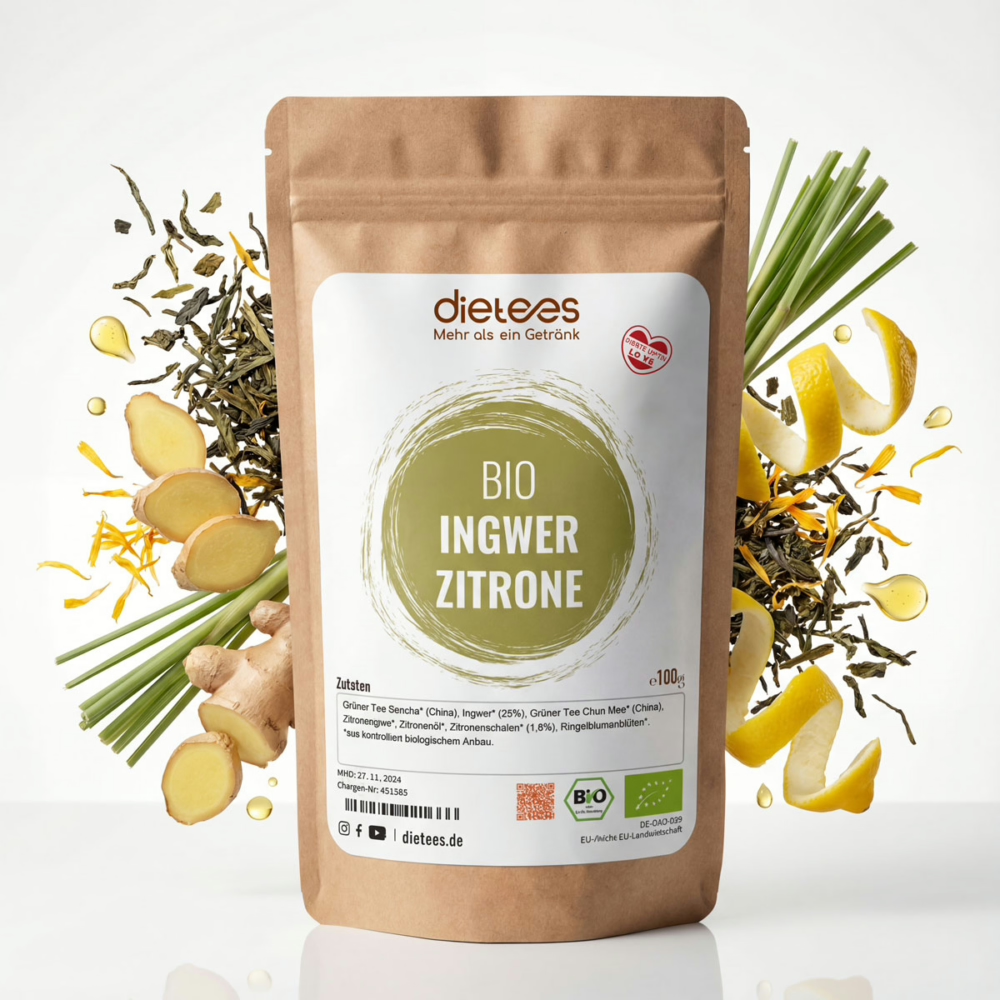
- Ginger & lemon – fresh and intense
- Ginger & green tea – vibrant and aromatic
- Ginger & apple & cinnamon – warm and balanced
- Ginger & turmeric – spicy and full of character
Preparing ginger tea
- Amount: 1–2 tsp (fresh or dried) per 250 ml
- Water temperature: 95–100 °C
- Steeping time: 5–8 minutes
For a more intense aroma, fresh ginger can be cut into thin slices.
Conclusion
Ginger in tea stands for spicy freshness and versatile uses. Whether on its own or as part of balanced blends – ginger lends every cup character.
👉 Discover premium Organic tea blends with ginger at DieTees – free shipping within Germany.
Matching products for this article