

DieTees Herb Encyclopedia
Black Tea – Origin, Varieties & Perfect Preparation

09
Oct
Oct
Black tea is more than a drink – it is tradition, craftsmanship and cultural heritage. From Assam to Darjeeling, every cup tells a story of origin and careful processing.
Black tea is made from the leaves of Camellia sinensis . Unlike green or white tea, the leaves undergo full oxidation. This process gives the tea its dark colour and robust aroma.
Production – precision and experience
- Withering: Freshly picked leaves lose part of their moisture.
- Rolling: The cell structure is opened, which starts the oxidation.
- Oxidation: The leaves develop their characteristic colour and aroma.
- Drying: Heat stops the process and stabilises the aroma.
- Sorting: The leaves are separated by size and quality.
Types of black tea – a journey around the world
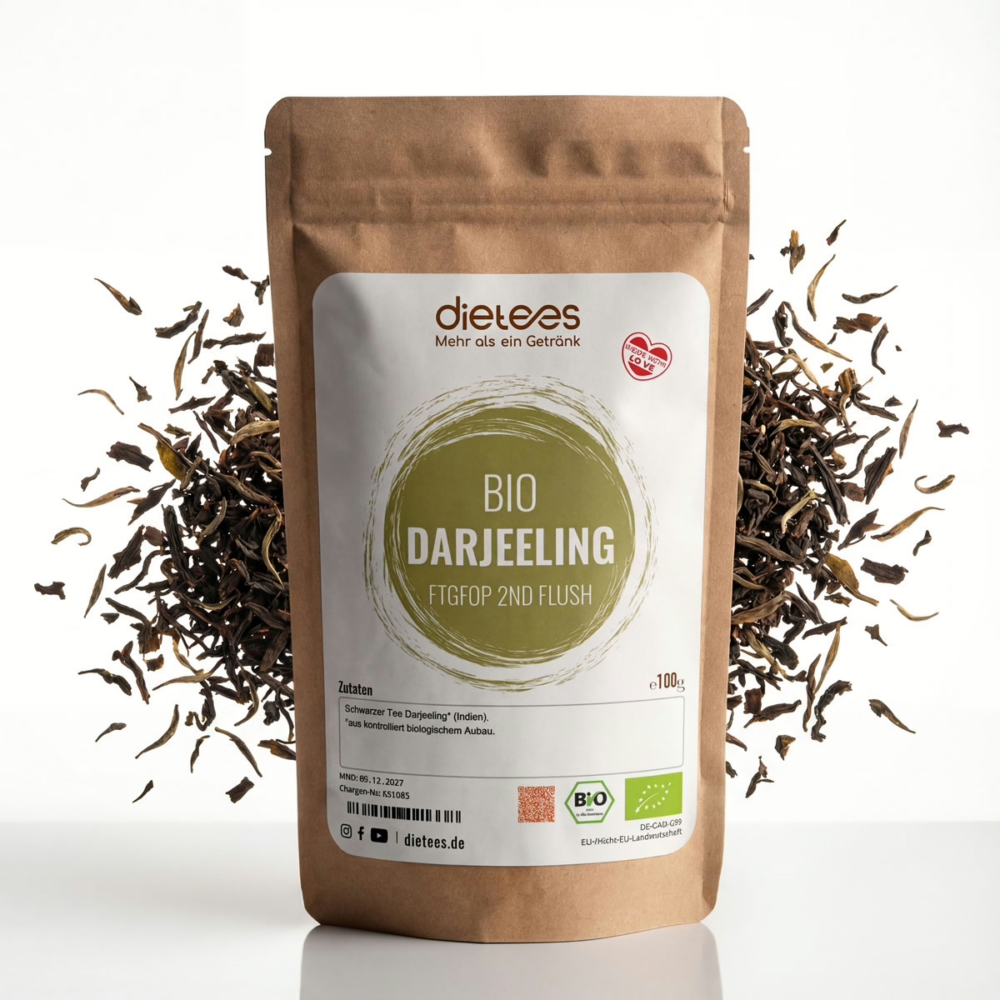
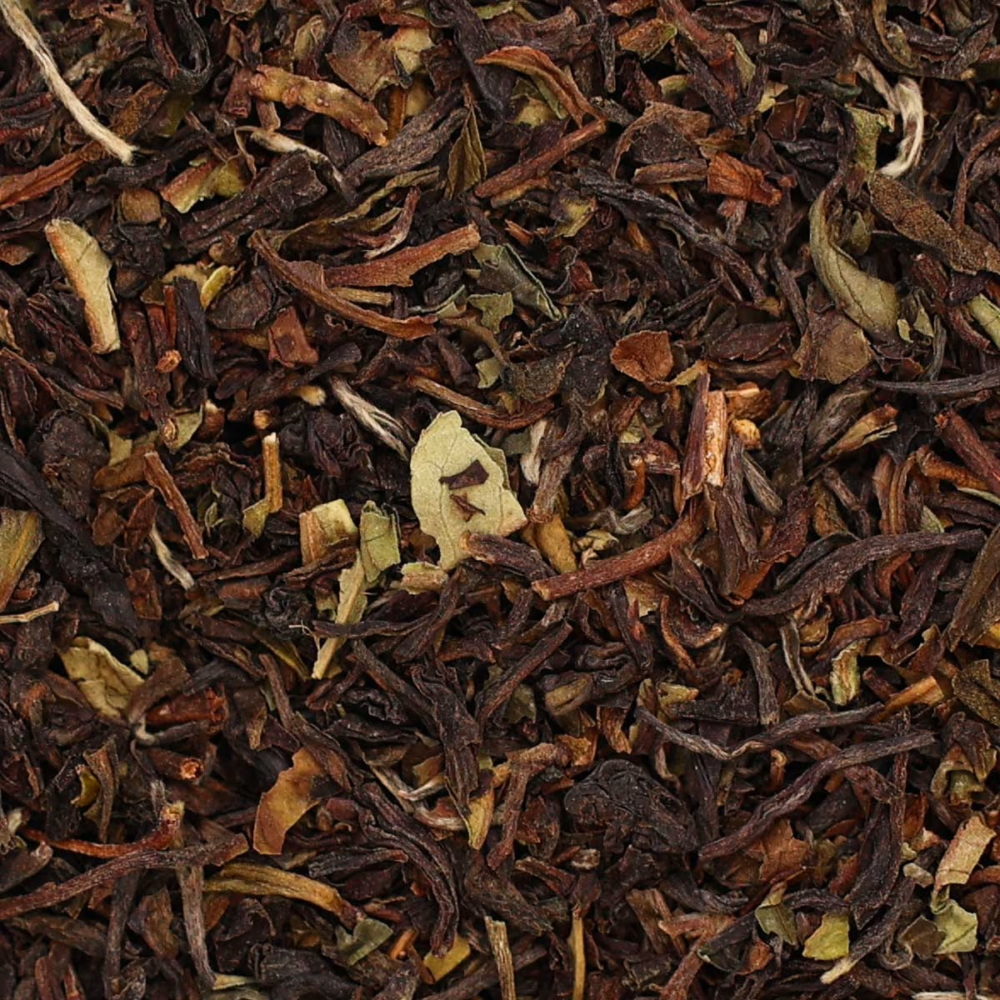
- Darjeeling: Floral, delicate and elegant.
- Assam: Robust, malty and full-bodied.
- Ceylon: Clear, lively and lightly citrusy.
- Keemun: Mild with a lightly smoky note.
- Yunnan: Earthy nuances with a fine sweetness.
- Lapsang Souchong: Distinctly smoky.
Flavour and character
Black tea is characterised by a robust structure and diverse aromas – ranging from malty and spicy to floral or smoky. The flavour profile varies considerably depending on origin, harvest time and processing.
Preparing black tea
- Water: Freshly boiled water (100 °C).
- Dosage: approx. 2 g per 250 ml.
- Steeping time: 3–5 minutes.
Longer steeping times intensify the flavour.
Popular blends
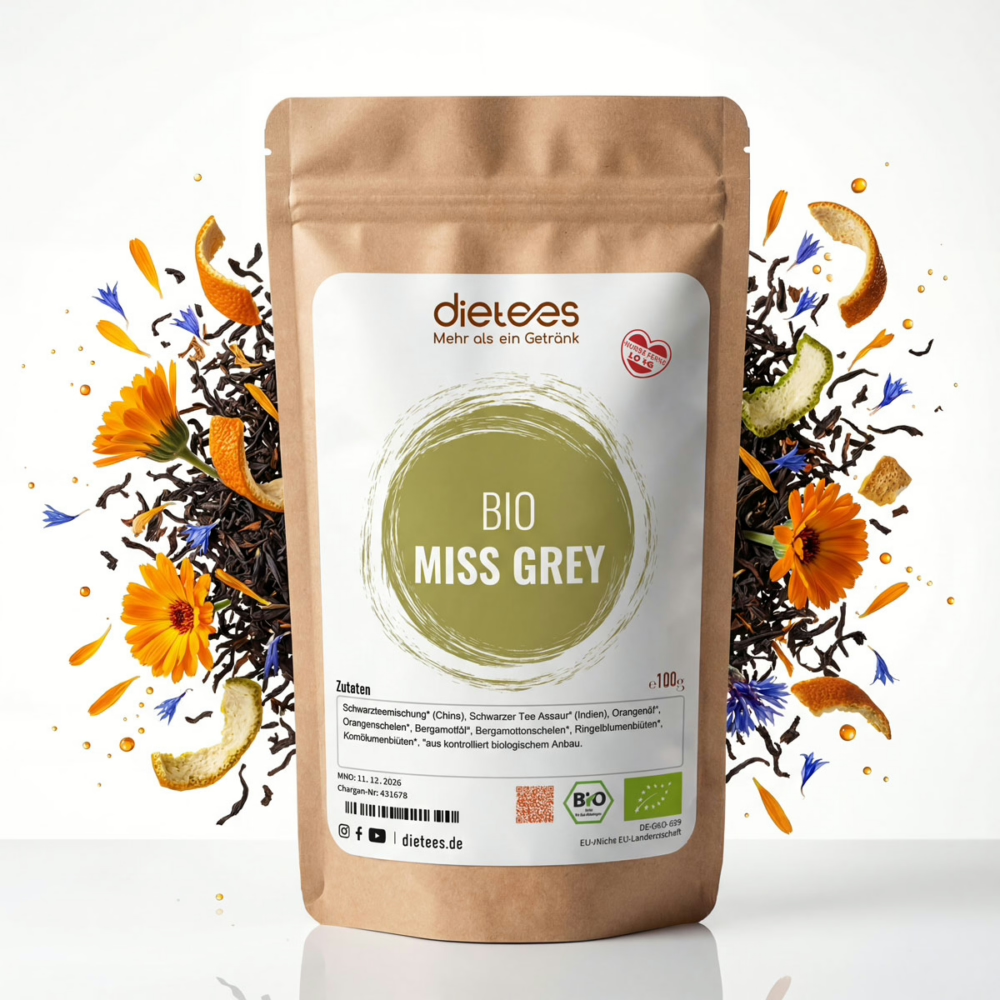
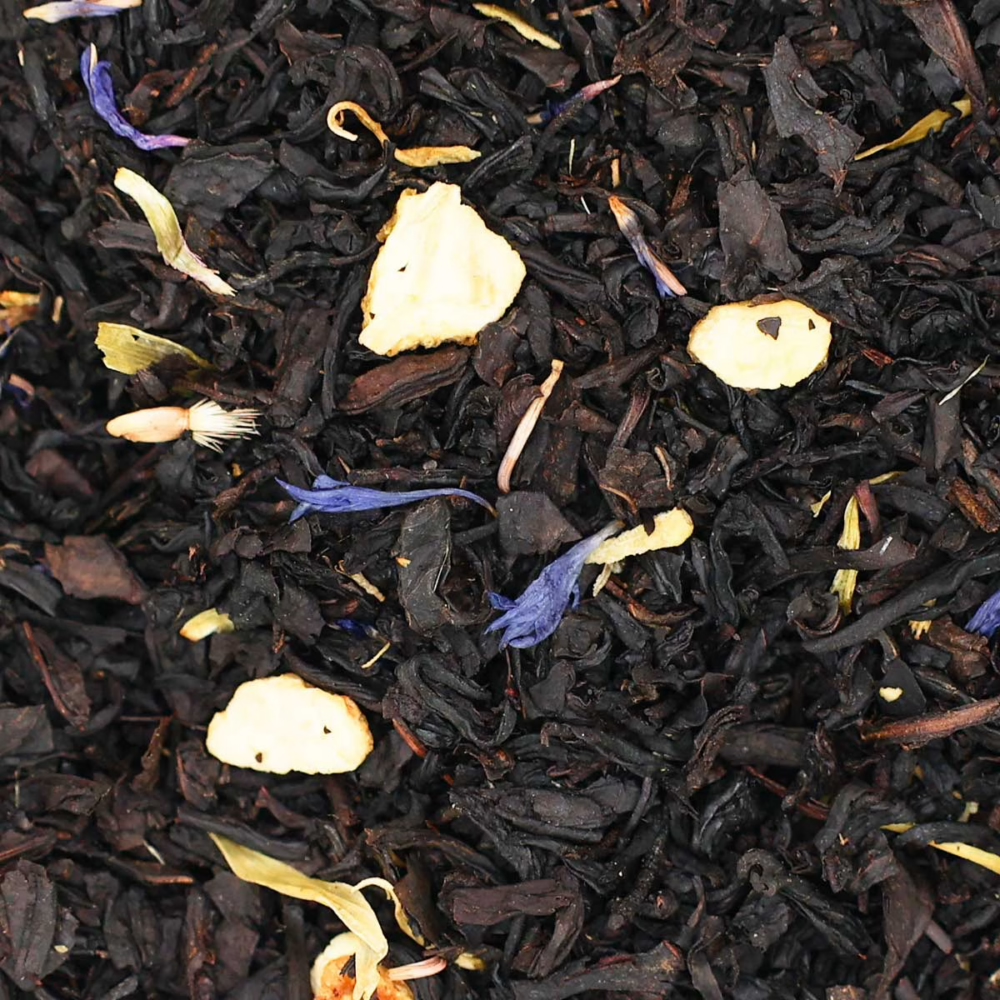
- Earl Grey: Refined with bergamot.
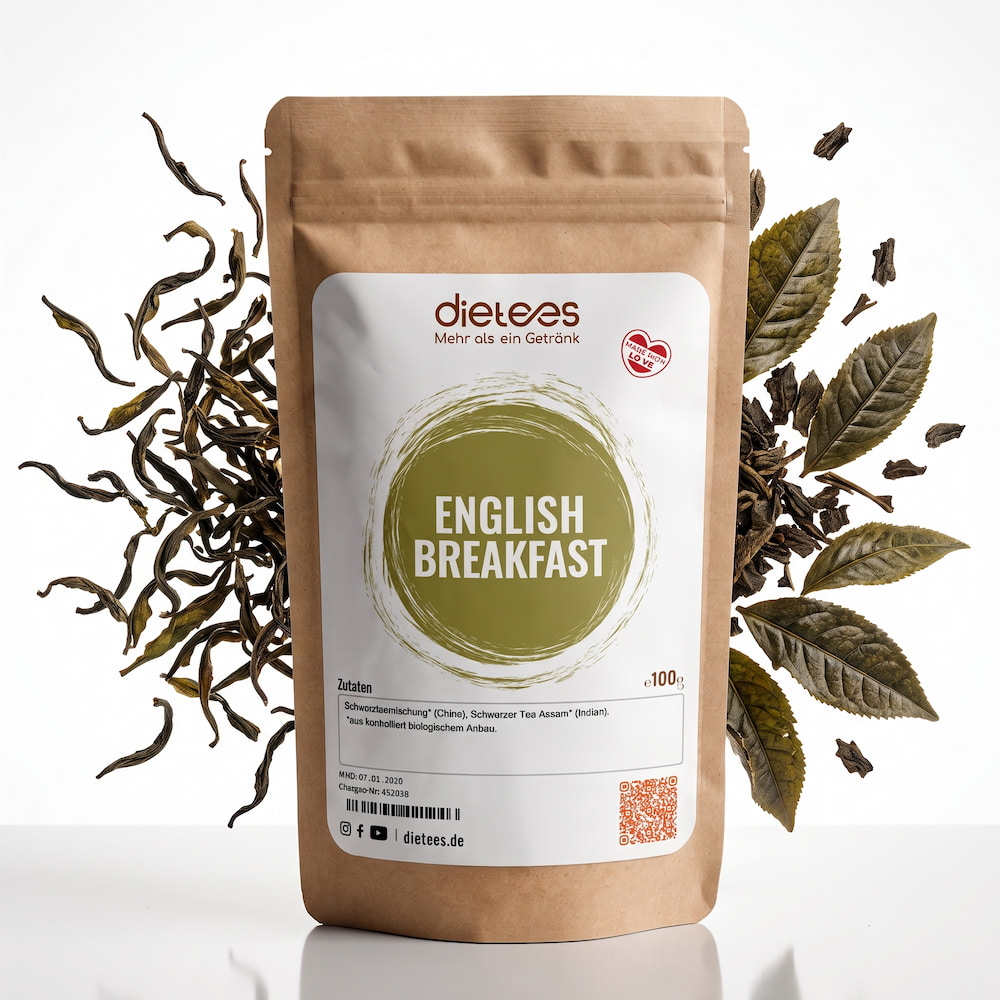
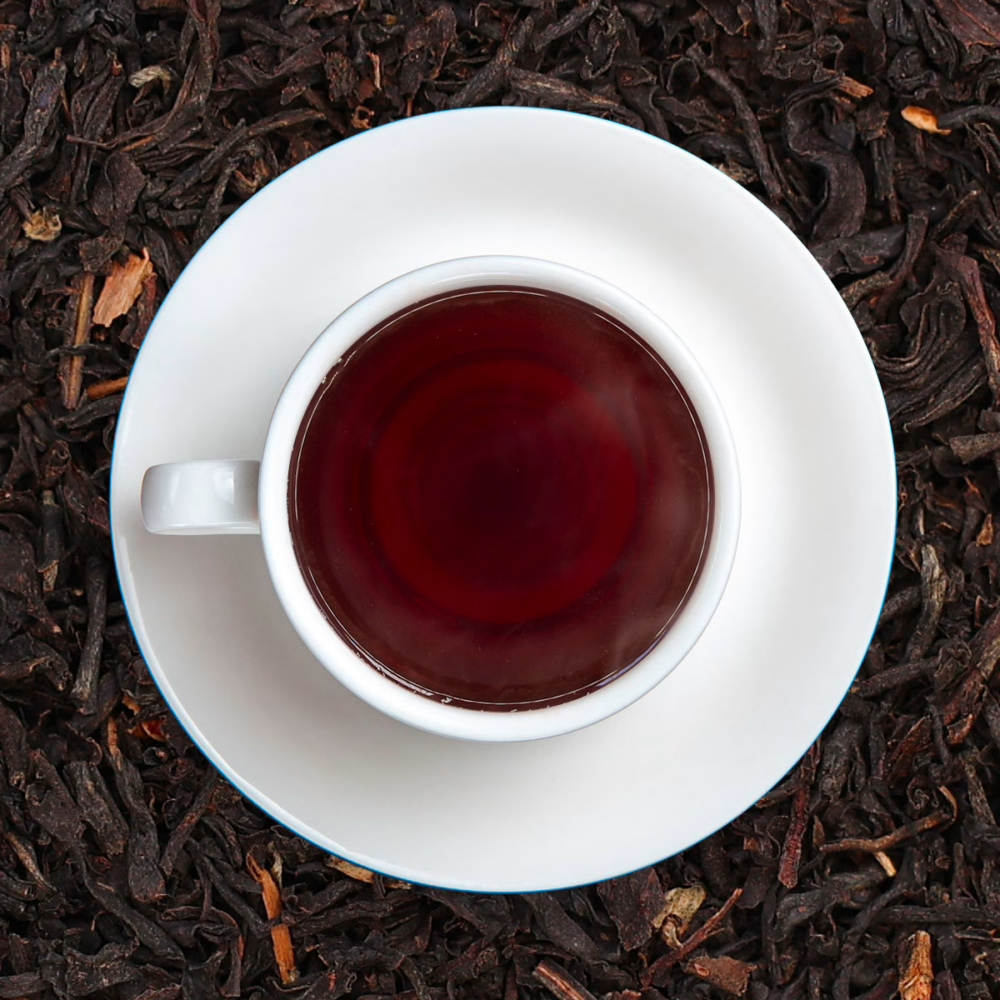
- English Breakfast: A robust breakfast blend.
- Chai: Spiced tea with cinnamon, cardamom and cloves.
- Russian Caravan: A smoky composition.
Notes
- Black tea naturally contains caffeine.
- Its intensity can be adjusted through dosage and steeping time.
Conclusion
Black tea combines tradition, variety and characterful aromas. Whether a robust Assam or an elegant Darjeeling – every variety brings its own expression to the cup.
Matching products for this article
-7%
8,40 €
View options
This product has multiple variants. The options may be chosen on the product page
-7%
7,30 €
View options
This product has multiple variants. The options may be chosen on the product page
7,20 €
View options
This product has multiple variants. The options may be chosen on the product page
-10%
7,50 €
View options
This product has multiple variants. The options may be chosen on the product page
You might also like
Discover in the shop: Black tea view →