

General
Matcha – Origin, Production, Quality Grades and Preparation
Aug
Matcha Tea: Flavour, Quality and Proper Preparation
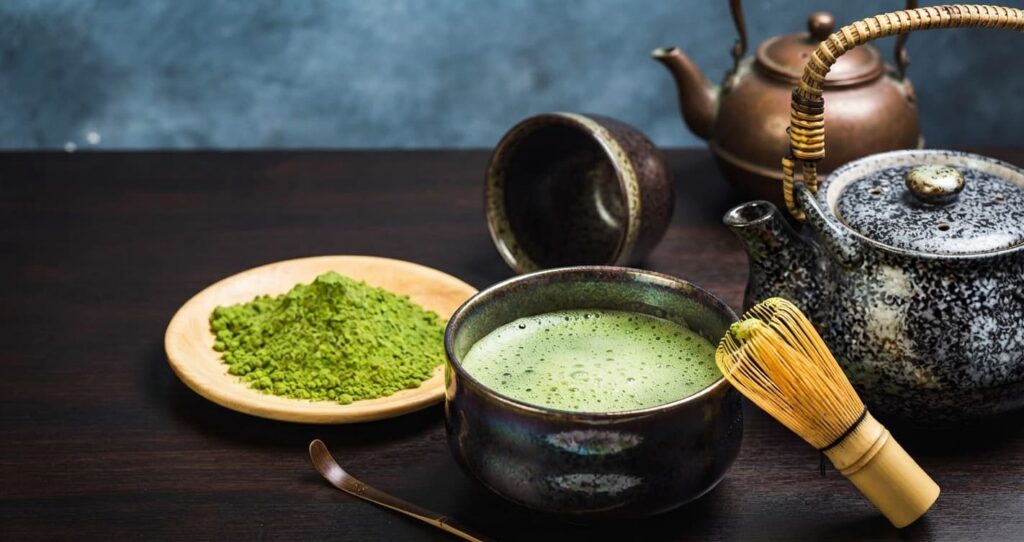
Matcha is a finely ground green tea powder from Japan. Unlike classic green tea, matcha isn't just infused: the tea powder is whisked directly with water and drunk in its entirety. This creates an intense, creamy and especially aromatic cup.
At DieTees, when it comes to matcha, we pay particular attention to colour, aroma, texture, origin and flavour. A good matcha should be finely ground, smell fresh and never taste dull or unpleasantly bitter in the cup.
In this guide, you'll learn exactly what matcha is, what it tastes like, what to look for when buying it, and how to prepare it properly at home – the classic way with water, or the modern way as a matcha latte.
What is matcha?
Matcha is a powder made from green tea. It is usually based on Tencha, a shaded green tea that is steamed, dried and then very finely ground after harvest.
What makes it special: with matcha, you don't just drink an infusion, you drink the entire finely ground tea leaf. That's why the quality of the powder matters so much. Colour, grind and freshness make a huge difference to the flavour.
Where does matcha come from?
Matcha has historical roots in China but was especially refined in Japan. Today, Japan is regarded as the most important origin for high-quality matcha. Well-known regions include Uji, Nishio and Kagoshima.
Origin alone doesn't tell the whole story, though. Cultivation, shading, harvest timing, processing, storage and how fresh the powder is when it reaches you all matter too.
Why is matcha shaded?
For high-quality matcha, the tea plants are usually shaded for a few weeks before harvest. This makes the leaves grow more slowly and develop an especially intense green colour along with a finer aroma profile.
- Colour: good matcha looks vibrant green, not grey or yellowish
- Taste: high-quality matcha tastes smoother and rounder
- Aroma: fresh matcha smells grassy, green and pleasant
- Texture: fine powder whisks up more easily
What does matcha taste like?
Matcha has a character all its own. It tastes green, slightly bitter, often creamy, and depending on quality, gently sweet as well. High-quality matcha also brings a pleasant umami note.
- Vegetal: green, fresh and slightly grassy
- Umami: round, deep and full in flavour
- Subtly bitter: especially noticeable with a stronger dose
- Slightly sweet: with good quality and proper preparation
- Creamy: when the powder is fine and whisked well
If matcha tastes very bitter, flat or dusty, it's often down to water that's too hot, too much powder, poor storage, or low quality.
Which matcha quality suits you?
Not every matcha is intended for the same purpose. For the classic preparation with water, a finer matcha is worth it. For lattes, smoothies or recipes, the flavour can be a bit stronger.
| Use | Suitable quality | What to look for |
|---|---|---|
| classic with water | fine matcha / Ceremonial Style | vibrant green, fine, soft in flavour |
| Matcha Latte | Premium or latte-suitable matcha | a bold aroma that doesn't get lost with milk |
| Smoothies | bold matcha | intense flavour and good solubility |
| Baking & desserts | Culinary Matcha | strong colour and a pronounced green tea flavour |
How can you tell good matcha?
When buying matcha, it pays to take a closer look. Many differences are already visible in colour, smell and texture.
- Colour: good matcha is vibrant green. Yellowish or grey tones often indicate older or lower quality.
- Texture: the powder should be very fine and feel soft.
- Aroma: fresh matcha smells green, clear and pleasant.
- Taste: good quality doesn't taste flat, but round, fresh and subtly bitter.
- Packaging: matcha should be stored away from light and tightly sealed.
How to prepare matcha properly
Preparation has a huge influence on whether matcha tastes round or bitter. Water temperature is especially important. Boiling water is too hot for matcha.
| Recommendation | Value |
|---|---|
| Amount | 1–2 g matcha per bowl |
| Water temperature | approx. 70–80 °C |
| Water amount | approx. 60–100 ml for classic matcha |
| Equipment | Bowl, bamboo whisk or a small milk frother |
Step by step
- Put 1–2 g of matcha into a bowl.
- Optional: sift the matcha through a fine sieve so no lumps form.
- Add a little warm water and stir into a smooth paste.
- Top up with water at 70–80 °C.
- Whisk briskly with a bamboo whisk until frothy.
DieTees tip: If your matcha tastes too bitter, use slightly cooler water or reduce the amount a little. Matcha often turns bitter not because of the variety, but because of the preparation.
Preparing a matcha latte
Matcha latte is especially popular because the milk or plant-based drink softens the green flavour. A matcha with a bold aroma works best here, so the flavour doesn't get lost.
- Put 1–2 g of matcha into a cup.
- Stir smooth with a little warm water.
- Froth 150–200 ml of warm milk or plant-based drink.
- Add the milk to the matcha and stir gently.
- Enjoy it pure or lightly sweetened, to taste.
Oat drink, almond milk or classic milk all work particularly well. For a cold version, mix the matcha with a little water and then serve it with ice cubes and cold plant-based drink.
Common mistakes with matcha
Matcha isn't difficult, but a few small mistakes can make a big difference to the taste.
- Water too hot: can make the tea bitter and dull.
- Not sifted: quickly leads to lumps.
- Too much powder: makes the cup very intense and bitter.
- Open storage: Matcha quickly loses its aroma when exposed to air and light.
- Wrong quality: not every matcha suits the classic preparation with water.
How should matcha be stored properly?
Matcha is sensitive to light, air, heat and moisture. It should therefore always be stored well sealed, dry and as cool as possible.
- Reseal the package immediately after opening
- protect from light and heat
- do not store near strong-smelling foods
- use up as fresh as possible after opening
Matcha at DieTees
If you want to buy matcha, look for good quality, a fresh aroma and a suitable use. At DieTees you'll find selected organic teas and matching products for mindful tea moments.
Matcha is especially exciting when you get to know it step by step: first classic with water, later perhaps as a matcha latte or in cold recipes.
FAQ
What is matcha?
Matcha is finely ground green tea powder. It's whisked with water and drunk in its entirety, not just infused.
Why does matcha sometimes taste bitter?
It's often down to water that's too hot, too much powder, or a lower quality. Use water at 70–80 °C and start with a small amount.
How much matcha should you use per cup?
For a classic bowl, 1–2 g of matcha is usually enough. For a matcha latte, the amount can be adjusted slightly to taste.
Can matcha be prepared without a bamboo whisk?
Yes. A bamboo whisk is traditional and very practical, but a small milk frother can also work well for everyday use.
Is matcha caffeine-free?
No. Matcha is made from green tea and naturally contains caffeine.
Can matcha be enjoyed cold?
Yes. Matcha also works well for an Iced Matcha Latte or cold tea recipes. To do this, first stir the powder smooth with a little water, then top up with cold milk, plant-based drink or water.
Conclusion
Matcha tea is a special form of green tea: intense, finely ground and versatile. Whether classic with water, as a matcha latte or in cold recipes – the right quality and preparation make all the difference.
If you want to buy matcha, look for a vibrant colour, fine powder, a fresh aroma and a suitable use. That way, matcha becomes more than just a trendy drink – it becomes a genuine moment of enjoyment.
👉 View organic matcha at DieTees
You might also like
Discover in the shop: Matcha view →