

DieTees Herb Encyclopedia
Clove Tea & Clove Water: Effects, Preparation and Recipe at a Glance
Oct
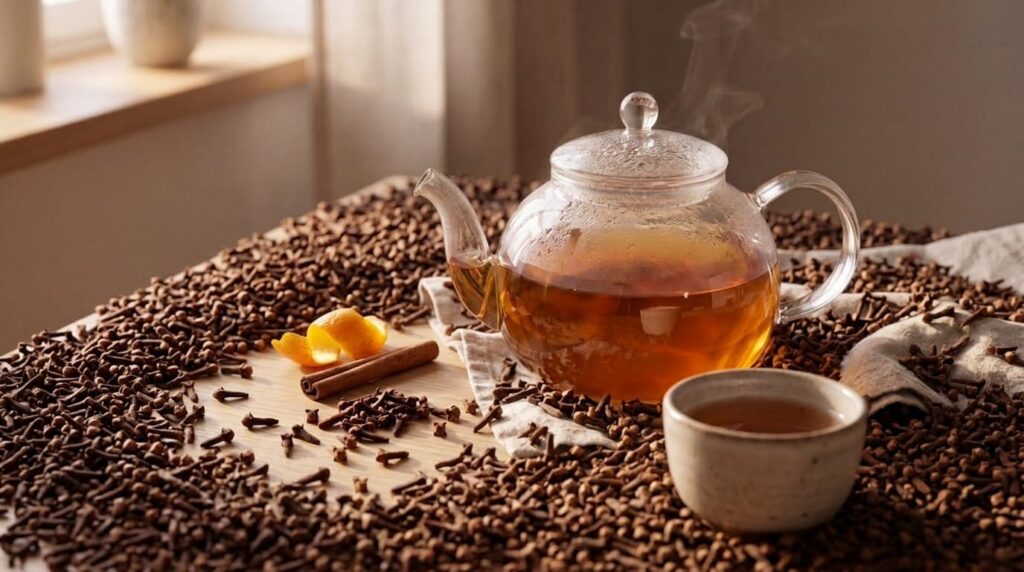
Clove water and clove tea are among the most searched-for topics related to the clove spice. No wonder: the dried flower buds of the clove tree (Syzygium aromaticum) – also cloves called – rank among the most aromatic spices there are. In this guide from dietees, you'll discover what's really behind the often-searched-for clove effects , how to properly prepare Clove water and clove tea (including a recipe) – and why quality is what determines a clove's aroma.
Important note: Cloves are a food and a spice, not a medicine. Health- and disease-related claims of effect are strictly restricted by law for foods. This article is for general information purposes only and does not replace medical advice.
Straight from our shop
Organic Whole Cloves – Intense Aroma for Tea & Cooking
100% organic, whole buds, no additives – bottled in Germany (DE-ÖKO-039). Ideal for clove tea, Clove water, baking and homemade recipes.
✔ 100% organic & vegan · ✔ no artificial additives · ✔ free shipping from €32.00 · ✔ 30-day money-back guarantee
Clove water and clove tea – what's it all about?
Both drinks are made from the same cloves, but differ in how they're prepared:
- clove tea is a hot infusion: whole cloves are covered with boiling water and left to steep for a few minutes.
- Clove water is usually a mild cold infusion: whole cloves are steeped in cold or lukewarm water for several hours.
What both have in common is a high proportion of essential oil, above all eugenol – the compound responsible for the unmistakably sweet, warm scent, and one that has long been studied in science. Cloves originally came from the Moluccas; today they're grown mainly in Zanzibar, Madagascar and Sri Lanka.
Clove effects – what tradition says and what the law allows
Anyone searching for clove effects, clove tea effects, clove tea effect or cloves effects usually wants to know what the spice actually “does” in the body. Here, it's important to stay factual: in traditional folk custom and many culinary cultures, cloves have been valued for centuries – above all for their warm, spicy aroma and their role in winter teas, chai blends and old family recipes.
Specific therapeutic or healing effects – for example relating to digestion, the respiratory tract, inflammation or blood sugar – may not, however, be advertised for a food product in Germany. Such statements are reserved for the medicinal field and belong in the hands of doctors or pharmacists. What can genuinely be said: cloves are a spice steeped in tradition with an especially intense aroma profile, whose main component, eugenol, is the subject of scientific research.
The frequently asked question “clove water drinking effect” is also best answered this way from a legal standpoint: clove water effect primarily means a mildly spicy taste experience. Anyone wanting to include it in their daily routine is best off doing so as a moment of enjoyment – not as a substitute for medical treatment.
Why the quality of the cloves determines the aroma
The full aroma of clove tea and Clove water depends directly on the quality of the cloves. The essential oil (eugenol) content is significantly higher in fresh, gently dried buds than in old, stale stock from the supermarket shelf. Here's how to recognise good cloves:
- Intense fragrance as soon as you open the pack – warm, sweet, spicy.
- Whole, undamaged buds rather than broken pieces and powdery remnants.
- Organic quality with no additives – no artificial flavourings, no irradiation.
- Clear origin & fresh bottling, so the essential oil is preserved.
That's exactly what our Organic Whole Clovesstand for: certified organic farming, gently dried, bottled aroma-safe in Germany (DE-ÖKO-039) – for a clove water and a clove tea that really taste of clove.
Is clove tea or clove water healthy?
The search terms clove water healthy and cloves healthy show just how much interest there is. Blanket advertising claims such as “cloves are healthy” are, however, not a legally permissible statement for a food. What can be said factually: clove tea and clove water are low-calorie, aromatic infusions that you can enjoy as part of a mindful, balanced diet. Whether and how they fit into your daily routine is best decided by you – for specific health questions, please consult a medical professional.
Clove water for weight loss?
Around the search term clove water for weight loss many promises circulate online. Important context: Clove water is not a slimming aid. A slimming or weight-reducing effect may not be advertised for foods and is not recognised as an established effect of a food. Unsweetened clove water can, at most, serve as a flavourful, low-calorie alternative to sweetened drinks – nothing more can genuinely be claimed.
Making clove water – recipe step by step
Here's how classic Clove water (cold infusion) turns out perfectly. The result is noticeably milder than a hot infusion – gentle, spicy and lightly sweet.
Clove water recipe
- 4–6 whole organic cloves into a glass with 250 ml lukewarm or cold water.
- Cover and leave to steep overnight (8–12 hours).
- Strain through a fine sieve before drinking.
Drinking clove water: Best enjoyed freshly made. Anyone who wants to prepare clove water can control the aroma via the steeping time – the longer it steeps, the more intense and spicy it becomes.
Preparing clove tea – classic recipe
For clove tea (hot infusion) you only need a few ingredients. Quantity and steeping time are crucial, since cloves are very intense in aroma.
Clove tea recipe – classic preparation
- Lightly crush 3–4 whole organic cloves (using a mortar or the back of a knife).
- Pour over 250 ml of freshly boiled water (approx. 95–100 °C).
- Cover and leave to steep for 8–12 minutes.
- Strain and enjoy at leisure – optionally with a little honey, lemon or orange peel.
Spiced clove chai (variation)
- 3 cloves + 1 piece of ginger + 2 cardamom pods + 1 cinnamon stick.
- Bring to a brief boil with 300 ml water, then simmer for 10 minutes.
- Serve with warm (plant-based) milk and a little honey.
Cloves compared to pepper and cinnamon
| Feature | cloves | Pepper | Cinnamon |
|---|---|---|---|
| Taste | Sweetly warm, spicy, very intense | Sharp, earthy | Sweet, woody, mild |
| Main aroma compound | eugenol | Piperine | Cinnamaldehyde |
| Suitability for tea | Very good (used sparingly) | More as an accent | Very good |
| Dosage/cup | 3–4 buds | 2–3 peppercorns | ½ stick |
Clove tea side effects & dosage guidance
The topic of clove tea side effects is also a common search topic. Factually speaking: in normal drinking amounts, clove tea is generally unproblematic for healthy adults. At very high doses or with sustained consumption of large amounts, the essential oil eugenol can irritate the mucous membranes.
| Question | Guidance |
|---|---|
| Typical amount | 1–2 cups per day |
| Per cup | 3–4 whole cloves per 250 ml |
| Sensitive individuals | Start with small amounts |
During pregnancy and breastfeeding, for children, for pre-existing conditions, or when taking medication regularly, it's advisable to consult a doctor before regular consumption.
Ready for your first clove tea?
Get our Organic Whole Cloves – whole buds in organic quality, no additives, bottled in Germany. Available in 100 g, 250 g and 1000 g.
🌿 100% organic & vegan · 🇩🇪 Made in Germany · 🚚 free shipping from €32.00 · ↩ 30-day money-back guarantee
Tip: if you prefer the spicy clove aroma in a harmonious blend, dietees also offers ready-made herbal and spiced tea blends.
Frequently asked questions about clove water & clove tea (FAQ)
What is clove water?
Clove water is a mild cold infusion: 4–6 whole cloves are steeped in cold or lukewarm water for 8–12 hours and then strained. It tastes gentler than hot clove tea.
What effect is traditionally attributed to cloves or clove tea?
In traditional folk custom, cloves are valued above all for their warm, spicy aroma and their role as a winter spice. Specific health-related claims of effect are not legally permitted for foods and are reserved for the medicinal field.
Is clove tea healthy?
Clove tea is a low-calorie, aromatic infusion that you can enjoy as part of a balanced diet. Blanket health claims are not legally permitted for a food.
Does clove water help with weight loss?
No, clove water is not a slimming aid. A weight-reducing effect may not be advertised for foods. Unsweetened, it can at most serve as a low-calorie alternative to sweetened drinks.
How do you make clove water?
Put 4–6 whole organic cloves into 250 ml of lukewarm or cold water, cover and leave to steep for 8–12 hours, then strain before drinking.
How do you prepare clove tea?
Lightly crush 3–4 whole cloves, pour over 250 ml of boiling water, cover and leave to steep for 8–12 minutes, then strain.
Does clove tea have side effects?
In normal amounts, clove tea is usually unproblematic for healthy adults. Very high amounts of the essential oil eugenol can irritate the mucous membranes. During pregnancy, breastfeeding, for children or pre-existing conditions, check with a doctor beforehand.
How much clove tea per day is typical?
Due to its high aroma intensity, 1–2 cups per day is considered common guidance, with 3–4 cloves per cup.
Note: the content of this article is for general information purposes only and does not replace medical advice, diagnosis or treatment. Clove tea and clove water are foods, not medicines.
You might also like
Discover in the shop: all tea varieties view →