

DieTees Herb Encyclopedia
Milk Thistle in Tea – Mild Aroma with Traditional Significance
Oct
Milk thistle (Silybum marianum) is a plant steeped in tradition from the Mediterranean region. Its seeds are characterised by a mild, slightly nutty aroma and are popularly used in well-balanced herbal tea blends.
Origin and Tradition
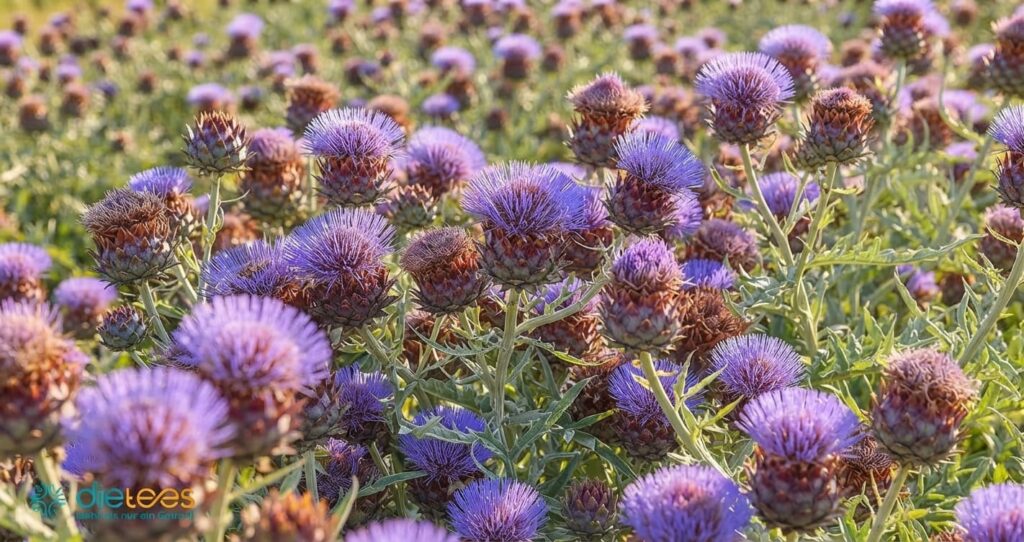
Milk thistle originally comes from the Mediterranean region and has been cultivated for centuries. Today, it grows in many regions of Europe as well as in Asia and America. Its characteristic purple blossoms and striking leaves make it a conspicuous wild plant.
Taste and Aroma
Milk thistle seeds have a gentle, slightly nutty flavour profile with a mild sweetness. In tea blends, they have a balancing effect and harmonise with stronger herbs.
- Mild: Unobtrusive base note
- Slightly nutty: Subtle depth of aroma
- Balanced: Ideal for herbal compositions
Popular Combinations with Milk Thistle
- Milk Thistle + Fennel: Gentle herbal blend
- Milk Thistle + Dandelion: Earthy, harmonious composition
- Milk Thistle + Mint: Fresh nuance with a mild base
- Milk Thistle + Ginger: Spicy accent
Use in Tea
For preparation, the seeds are lightly crushed so that their aroma can develop optimally.
- 1 teaspoon lightly crushed seeds
- 250 ml hot water
- Steep for 10–15 minutes
Notes
People with a known sensitivity to Asteraceae plants should check their individual tolerance.
Conclusion
Milk Thistle in Tea represents mild, nutty aroma and traditional botanical diversity. As part of well-balanced herbal tea blends, it brings depth of flavour and character to every cup.
Matching Products for This Article




You might also like
Discover in the shop: all tea varieties view →