

DieTees Herb Encyclopedia
Rooibos Tea – Origin, Flavour & Caffeine-Free Enjoyment
Oct
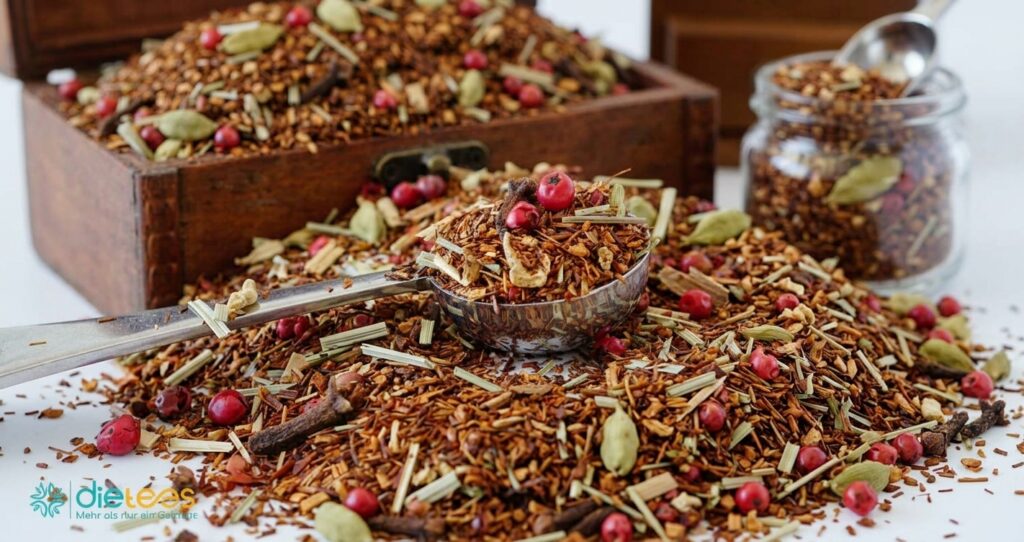
Rooibos, also known as redbush tea, comes from the Cederberg Mountains of South Africa. Its mild, slightly sweet aroma and coppery-red cup colour make it a popular alternative to classic tea.
Origin and history
Rooibos grows exclusively in the Cederberg region of South Africa. The plant Aspalathus linearis is native there. It has been used as an aromatic infusion for centuries and is now known worldwide.
Flavour and character
Rooibos tea is characterised by a mild, slightly sweet and subtly nutty note. Its natural red colour develops through oxidation during processing.
Green rooibos – the unoxidised variant – offers a fresher, slightly grassy flavour profile with fine floral nuances.
Caffeine-free & versatile
Rooibos is naturally caffeine-free and contains only low amounts of tannins. This keeps the infusion pleasantly mild even with longer steeping times.
It is suitable for:
- hot preparation
- iced tea
- blends with spices or fruit
- preparation with milk or plant-based alternatives
Cultivation and processing
After harvesting, the shoots are cut and moistened. Natural oxidation creates the typical red colour. Green rooibos is heated immediately to stop this process.
Preparation
- Classic rooibos: 6 g per 500 ml boiling water, steep for 5–8 minutes
- Green rooibos: 70–80 °C hot water, steep for 3–5 minutes
- Iced tea: Allow to cool and serve with ice
Note: Tea is a food and does not replace medical treatment.
Conclusion
Rooibos tea combines South African tradition with mild flavour and versatile preparation. Whether enjoyed plain or as part of aromatic blends – rooibos stands for caffeine-free enjoyment at any time of day.
Matching products for this article
[ts_products columns="4" per_page="4" ids="20616, 20625, 20686, 20672"]You might also like
Discover in the shop: Rooibos tea view →