

DieTees Herb Encyclopedia
Mate Tea – South American Tradition with Bold Character
Oct
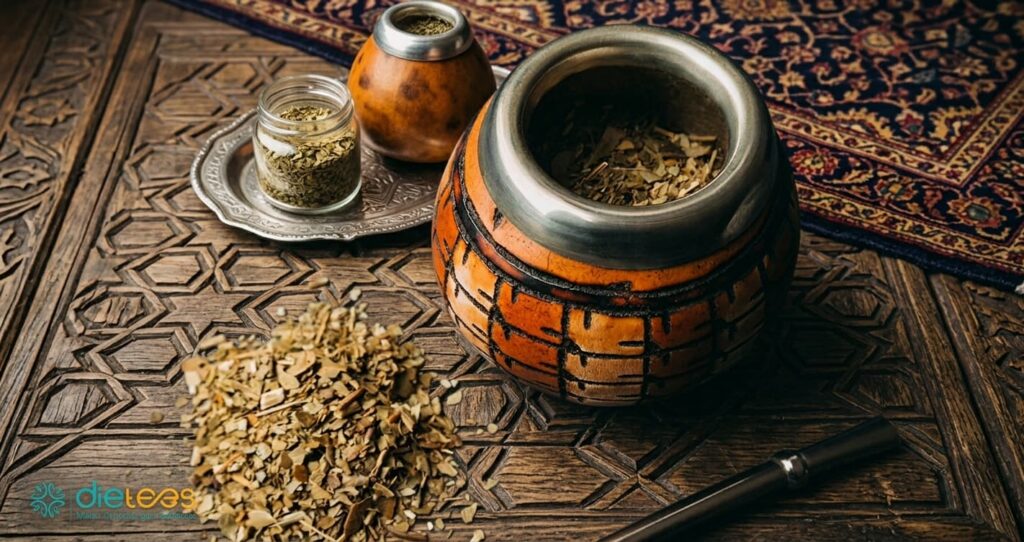
Mate, also known as yerba mate, is a traditional beverage from South America. Made from the leaves of the mate shrub (Ilex paraguariensis), it impresses with its distinctively bold, slightly tart aroma.
Origin and cultivation
Mate grows in the subtropical regions of South America, particularly in Argentina, Brazil and Paraguay. For many people there, mate is much more than a drink – it is a symbol of community and living tradition.
- Botanical family: Holly family
- Cultivation: Warm, humid climate zones
- Cultural significance: Drinking together as a social ritual
Taste and aroma
Mate is characterised by a distinctive flavour profile:
- Classic: Earthy, slightly smoky and pleasantly bitter
- Gently cured: Milder, with delicate herbal notes
- Tereré: Fresh and invigorating as a cold infusion
Depending on processing and origin, the aroma varies from bold-tart to soft and balanced.
Preparing mate
Traditionally, mate is drunk from a calabash gourd with a bombilla. It can, however, just as easily be prepared in a cup.
- 1–2 tablespoons of mate leaves
- 250 ml water (70–80 °C)
- steep for 3–5 minutes
For tereré, mate is infused with cold water or juice.
Mate in tea blends
In tea blends, mate provides a robust, tart base note and harmonises well with:
- Citrus fruits
- Mint
- Ginger
- Berries
Notes
Mate naturally contains caffeine. People who are sensitive to caffeinated drinks should take this into account.
Conclusion
Mate tea stands for South American culture, communal tradition and a distinctive flavour profile. Whether hot or cold – mate brings character to every cup.
Matching products for this article


You might also like
Discover in the shop: Mate tea view →