

DieTees Herb Encyclopedia
Turmeric in Tea – Golden Spice with Aromatic Depth
Oct
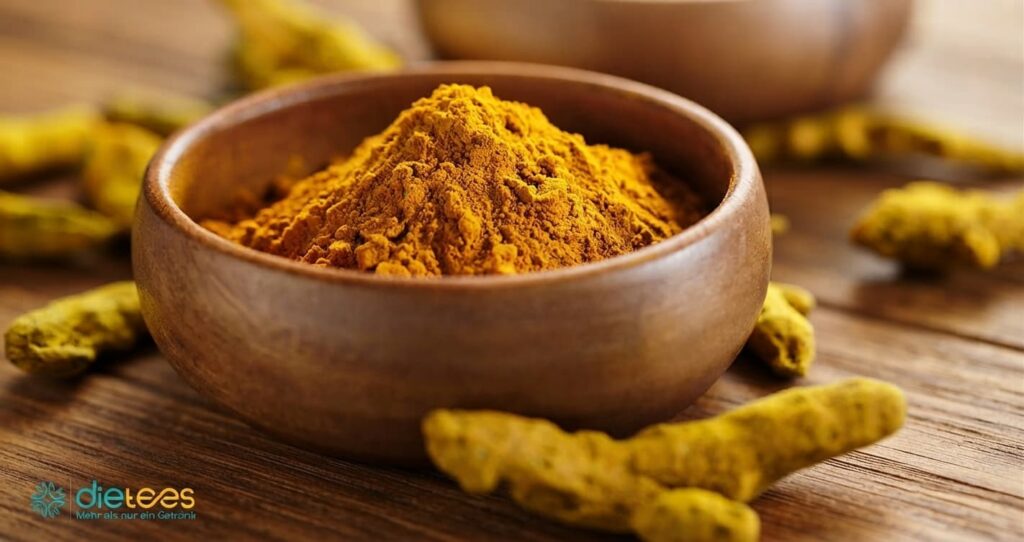
Turmeric (Curcuma longa), often called the “golden spice”, delights with its bright yellow colour and its characteristic warm, spicy flavour. In tea blends, turmeric provides depth, colour and a distinctive aromatic note.
Flavour and aroma of turmeric
Turmeric has a lightly sharp, earthy profile with a subtle bitterness and a warm, spicy finish. Its aroma comes across as:
- spicy and full-bodied
- lightly peppery
- pleasantly warm in flavour
The intense golden-yellow colour – caused by the natural plant compound curcumin – also makes turmeric a visual highlight in any tea blend.
Popular tea combinations with turmeric
- Turmeric + ginger: spicy intensity with a robust note
- Turmeric + cinnamon: a warm spice blend for cooler days
- Turmeric + lemon: fresh balance to the earthy spice
- Turmeric + honey: a gentle rounding-off of the spice notes
Cultivation and origin
Turmeric grows in tropical regions, particularly in India, Indonesia and China. The underground rhizome is used, which after harvesting is cleaned, boiled, dried and processed into powder.
DieTees sources turmeric from carefully selected growing regions to ensure quality, purity and an intense aroma.
Traditional significance
Turmeric has a long history in various cultures – both in the kitchen and in traditional spice and herbal applications. Its distinctive colour and aroma have made it a treasured part of countless recipes for centuries.
Preparing turmeric tea
- 1 teaspoon of turmeric powder or fresh slices
- 250 ml hot water
- Steep for 5–10 minutes
For a more intense flavour, turmeric can be combined with a pinch of black pepper.
Notes
Anyone with a sensitive stomach or on regular medication should consider seeking individual advice. Moderate use is recommended.
Conclusion
Turmeric in tea stands for golden colour, spicy depth and versatile combination possibilities. Whether on its own or in spice blends – turmeric gives every cup a warm, characterful note.
Matching products for this article
[ts_products columns="4" per_page="4" ids="20677, 20238, 20576, 20672"]You might also like
Discover in the shop: Herbal tea view →
Bio Free Your MindBio Active Power TeeBio Ingwer Fenchel Kräutertee – Stomach Settler