

DieTees Herb Encyclopedia
Basil in Tea – Sweetly Spicy Aroma with Tradition
Oct
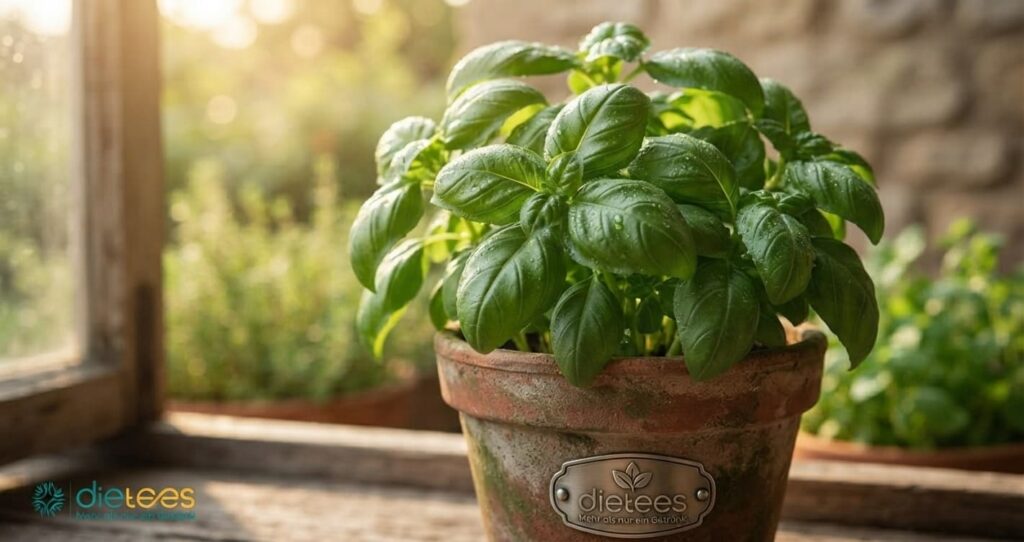
Basil (Ocimum basilicum), also known as the “king of herbs”, is a traditional culinary herb with a distinctively aromatic profile.
While basil is best known from Mediterranean cuisine, it is also used in modern tea blends. Its mild, spicy aroma lends herbal and fruit teas a special freshness.
Origin and cultural background
Basil originally comes from tropical regions of Africa and Asia. The name derives from the Greek word basilikos (“royal”). The plant reached Europe via trade routes and is now widespread worldwide.
In many cultures, basil held symbolic significance and was used both culinarily and traditionally.
Flavour and character in tea
- Sweetly spicy
- Slightly peppery note
- Fresh, aromatic profile
Basil lends lightness and a subtle spiciness to tea blends and is particularly well suited to summery compositions.
Popular combinations
- Basil & lemon – freshly balanced
- Basil & ginger – spicily combined
- Basil & mint – aromatic and invigorating
- Basil & chamomile – mildly harmonised
- Basil & green tea – balanced flavour profile
Preparation
- Amount: 1–2 tsp dried leaves per 250 ml
- Water temperature: 90–100 °C
- Steeping time: 5–8 minutes
Fresh basil leaves can also be used and lend the tea a particularly vibrant aroma.
Note: basil is a food ingredient and not a medicinal product.
Conclusion
Basil in tea stands for a sweetly spicy aroma with a Mediterranean character. Combined with citrus notes, herbs or spices, it creates a wonderfully balanced tea blend.
👉 Discover premium tea blends with basil at DieTees – free shipping within Germany.
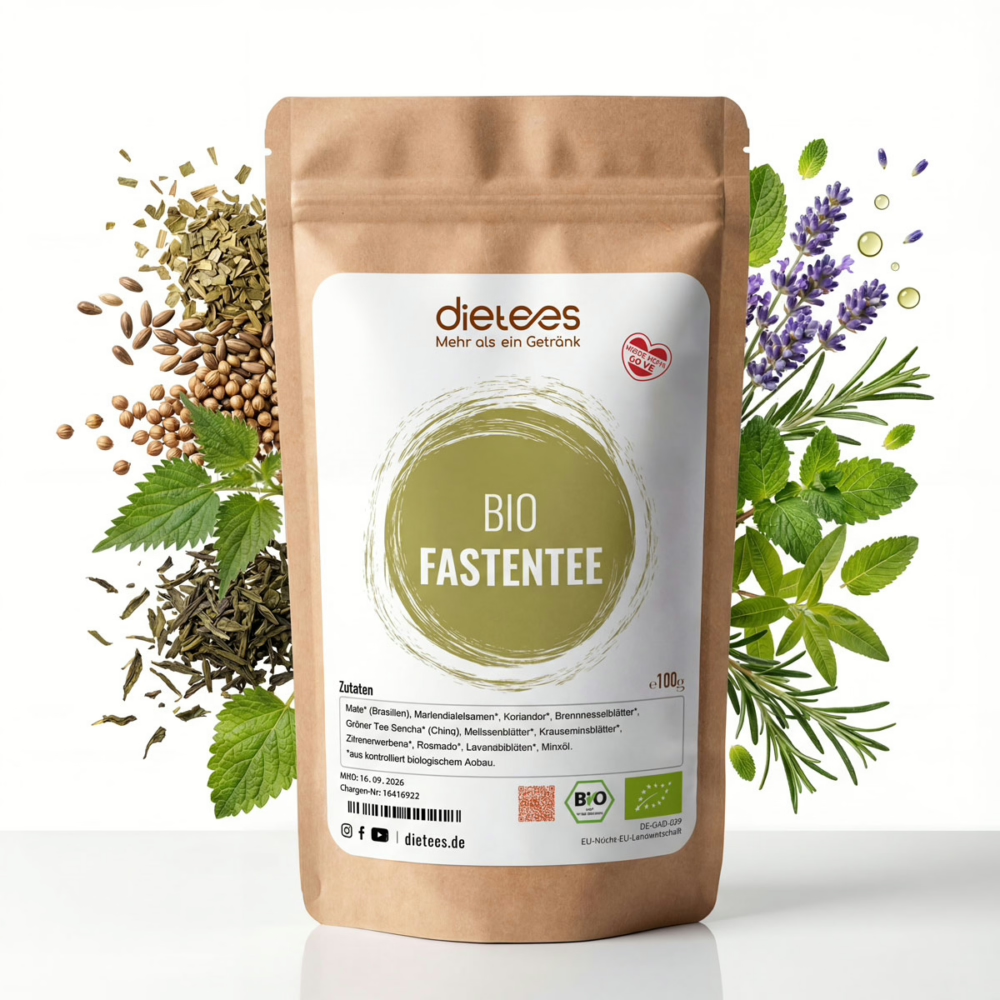
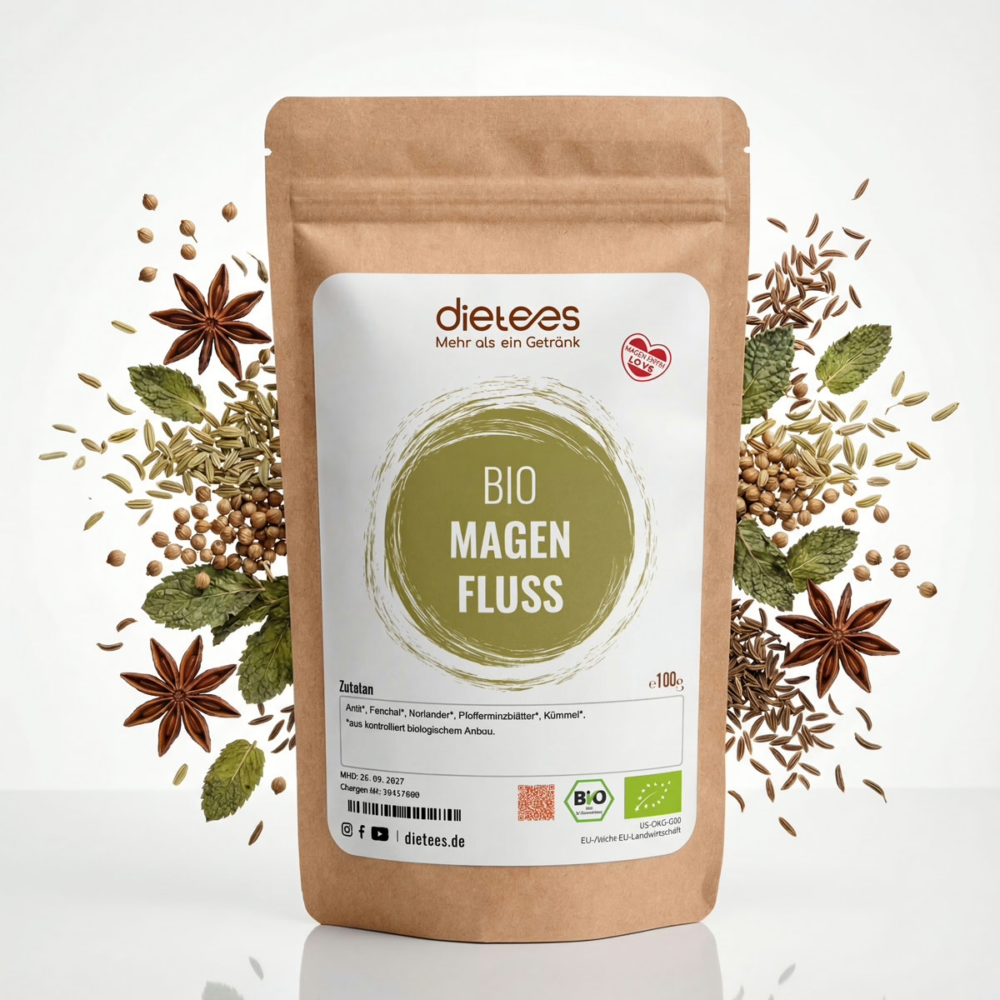
Matching products for this article

You might also like
Discover in the shop: Herbal tea view →
Bio Free Your MindBio Active Power TeeBio Ingwer Fenchel Kräutertee – Stomach Settler