

General
Mate Tea: Origin, Ingredients & Preparation (Yerba Mate)
Jun
Mate Tea is no longer an insider tip — it's a way of life. A traditional everyday drink in its South American homeland for centuries, Yerba Mate has long since found its firm place in Europe too. Whether as a natural pick-me-up with gentle caffeine, a companion for active days, or part of a mindful lifestyle: organic mate tea offers an aromatic taste experience — completely free from artificial additives. In this guide, you'll learn everything about its origin, ingredients and the right preparation.
Our Two Organic Mate Varieties
Do you prefer your mate fresh and minty or fruity and citrusy? Both varieties come from certified organic farming:

Bio Mate Fresh
refreshing · invigorating · minty-green
Mate meets lemongrass and peppermint — a refreshing, invigorating drink, perfect for active days. Also a delight chilled as iced tea.
Discover Bio Mate Fresh
Bio Mate Orange
aromatic · citrus · invigorating
Mate meets the natural freshness of orange peel — a citrus-fruity variation, ideal for focused hours at the desk.
Discover Bio Mate OrangeOrigin & History: The Green Gold of the Indios
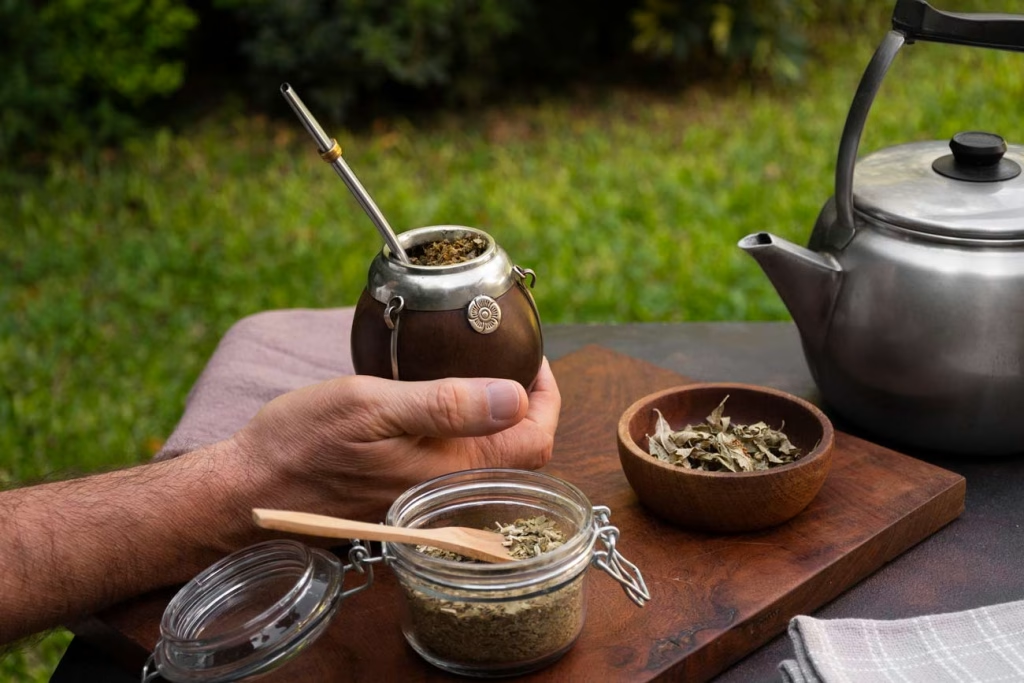
The origin of mate tea lies with the peoples of South America — particularly in Paraguay, where the holly Ilex paraguariensis is native. Mate tea is made from its leaves, traditionally drunk from a gourd vessel (the „Cuia") using a metal straw (the „Bombilla").
This centuries-old ritual is still alive today — and not just among the Gauchos in Argentina, but by now also in modern kitchens worldwide.
Pre-Columbian Era
The Guaraní peoples of South America used the leaves of the holly as an invigorating drink and part of their daily lives.
17th Century
Jesuit missionaries in Paraguay begin cultivation and contribute to its spread throughout South America.
19th Century
Mate becomes a firm part of gaucho culture in Argentina, Uruguay and Brazil — drunk from a Cuia with a Bombilla.
Today
Mate conquers the world as an alternative to coffee and finds its place in modern kitchens and cafés across Europe.
Naturally Awake Thanks to Gentle Caffeine
Mate contains between 0.3 and 1.5 percent caffeine — similar to coffee, but with a noticeably gentler perception in the drinking profile. The reason is the natural combination with theobromine and theophylline found in the leaves of the holly.
So if you're looking for a natural alternative to coffee , mate tea makes an aromatic companion — especially in the morning or as a break between appointments.
Caffeine Compared
| Drink | Caffeine (avg.) | Perception | Time of Day |
|---|---|---|---|
| Mate Tea | 30–50 mg / cup | Gentle, even | Morning · Late Morning · Afternoon |
| Coffee | 80–100 mg / cup | Fast, intense | Morning |
| Green Tea | 20–30 mg / cup | Mild | All Day |
| Black Tea | 40–70 mg / cup | Medium | Morning · Late Morning |
🌿 Mate Tea
- Caffeine (avg.)
- 30–50 mg / cup
- Perception
- Gentle, even
- Time of Day
- Morning · Late Morning · Afternoon
☕ Coffee
- Caffeine (avg.)
- 80–100 mg / cup
- Perception
- Fast, intense
- Time of Day
- Morning
🍵 Green Tea
- Caffeine (avg.)
- 20–30 mg / cup
- Perception
- Mild
- Time of Day
- All Day
🍂 Black Tea
- Caffeine (avg.)
- 40–70 mg / cup
- Perception
- Medium
- Time of Day
- Morning · Late Morning
Ingredients: What's in Yerba Mate?
Mate isn't just caffeine-rich — it naturally contains a range of interesting plant compounds. Important: the concentrations in a cup of tea are significantly lower than in standardised extracts or supplements.
Caffeine (0.3–1.5%)
Naturally present — responsible for the invigorating drinking profile
Theobromine & Theophylline
Natural companion compounds of caffeine, typical of Yerba Mate
B Vitamins
Traces of vitamin B1, B2, B3, B5, B6 — as natural constituents
Minerals
Magnesium, manganese and other minerals as natural constituents
Chlorogenic Acid
A secondary plant compound also found in coffee
Saponins
Secondary plant compounds — responsible for the typical light foam formation
Preparation: How to Make the Perfect Mate Tea
Unlike green or black tea, mate can't tolerate boiling water — otherwise it turns bitter. The optimal temperature is well below boiling point:
Step by Step
- Put 3 teaspoons of mate leaves into a cup or thermos flask
- Pour over with water at 80–85 °C (not boiling!)
- Let steep for 5–10 minutes — the longer, the stronger the tea
- The second infusion usually tastes milder and more harmonious — don't throw it away!
- Enjoy hot from the thermos flask or as a cold-brewed iced tea
Traditional: With Cuia and Bombilla
In South America, mate is traditionally drunk from a gourd vessel (Cuia) with a metal straw (Bombilla). The mate is infused with warm water — and sipped through the perforated end of the Bombilla, so the leaves stay in the vessel.
This ritual is more than just preparation — it's a social moment: in Argentina, Uruguay and Brazil, a Cuia is often shared within a group, with everyone taking a sip in turn. A form of togetherness that has stayed alive for generations.
Frequently Asked Questions About Mate Tea
How much caffeine does mate contain compared to coffee?
Mate contains around 30–50 mg of caffeine per cup, whereas coffee has 80–100 mg. The drinking profile is often perceived as “gentler”, since mate also naturally contains theobromine and theophylline.
Does mate tea really wake you up?
Mate tea contains natural caffeine and is therefore perceived as an invigorating drink — similar to coffee or black tea. The individual effect depends on sensitivity and dosage.
What water temperature is ideal for mate?
80–85 °C — in other words not boiling. Hotter water quickly makes mate bitter. If you have a kettle with temperature control, you're clearly at an advantage.
What does mate tea taste like?
On its own, mate is herbaceous, slightly bitter and earthy — some call it “grassy”. In the DieTees blends (Fresh, Orange) it's combined with peppermint/lemongrass or orange peel, which makes the character friendlier and more approachable.
Can I also prepare mate as iced tea?
Very well, in fact! Cold brewing overnight produces a refreshing, milder mate iced tea. Bio Mate Fresh and Bio Mate Orange are especially well suited for this.
May I drink mate during pregnancy?
Due to its caffeine content, we recommend consulting a doctor before regular consumption during pregnancy and breastfeeding — just as with coffee, black tea or green tea.
Is mate suitable for children?
Due to its caffeine content, mate is not recommended for children. Mild herbal or fruit teas are better suited for children.
How do Bio Mate Fresh and Bio Mate Orange differ?
Bio Mate Fresh combines Yerba Mate with lemongrass and peppermint — fresh, clean, ideal for active days. Bio Mate Orange relies on the citrus-fruity freshness of orange peel — more aromatic and fruitier in profile.
Note: The content of this article is for general information purposes only and does not replace medical advice, diagnosis or treatment. Mate tea is a food, not a medicine. Due to its caffeine content, pregnant and breastfeeding women, children and people with cardiovascular conditions should consult a medical professional before regular consumption.