

DieTees Herb Encyclopedia
Wormwood Tea – Flavour, Tradition & Use
Oct
Wormwood Tea – Flavour, Tradition & Use
Wormwood (Artemisia absinthium) is one of Europe's most characterful bitter herbs – with silvery-green leaves, an intense aroma and a long cultural history as part of traditional bitter herb blends.
What is wormwood?
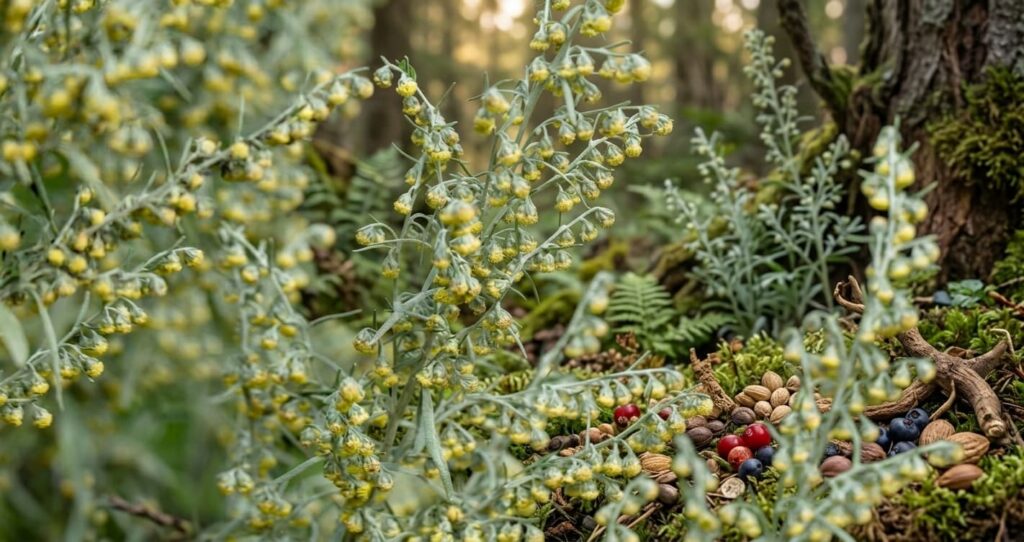
Wormwood (Artemisia absinthium) is a perennial, herbaceous plant from the daisy family. It is characterised by silvery-green, finely feathered, downy leaves and small yellow flowers in dense clusters. It can grow up to 1.5 metres tall and has been rooted in European, North African and Central Asian herbal traditions since antiquity. Wormwood is best known for its intensely bitter aroma – one of the most powerful in the entire plant world.
Artemisia absinthium
Botanical name – “absinthium” refers to its intensely bitter character.
Daisy family
Related to mugwort and tarragon (Asteraceae family).
Perennial
A robust plant that lasts for several years and becomes woody.
Silvery-green
Typically silvery, shimmering leaves due to fine hairs.
Botanical characteristics
Wormwood is easy to recognise by its unmistakable appearance – these four features define the plant:
Up to 1.5 m tall
Upright, slightly branching growth with herbaceous to woody stems.
Feathery leaves
Finely divided, multiply pinnate leaves, silvery due to dense hairs.
Yellow flowers
Small, spherical flower heads in dense clusters, July to September.
Distinctively fragrant
A spicy, aromatic scent released when the leaves are rubbed.
History & tradition
Wormwood looks back on more than 2,000 years of cultural history and is one of Europe's oldest cultivated herbs. Here are the key milestones:
First written mentions
Wormwood was already described in Greek and Roman sources – including by Dioscorides and Pliny the Elder. The plant was an ingredient in numerous herbal wine recipes.
Monastery gardens & herbals
In the Middle Ages, wormwood was cultivated in almost every monastery and farm garden. Hildegard of Bingen and others devoted their own descriptions of the herb in their works.
Absinthe culture
Wormwood became a main ingredient of absinthe – the “green fairy” of the French and Swiss art and literary scene. Artists such as Van Gogh and Toulouse-Lautrec made the drink famous.
Modern bitter tea tradition
In organic herbal tea blends, wormwood is prized today for its unmistakable bitter character – a classic for lovers of intense aromas and traditional herbal culture.
Where does wormwood rank on the bitterness scale?
Bitter herbs differ enormously in their intensity. Wormwood is one of the most powerful bitter herbs of all – here's a comparison:
This scale is intended only as a taste comparison of bitterness intensity – it is not an assessment of effect or quality.
What does wormwood taste like in tea?
Wormwood has an unmistakably characterful aroma – it's not for tea beginners, but an experience for lovers of traditional bitter herbs:
Intensely bitter
One of the strongest bitter traits among native herbs – immediately noticeable.
Earthy and herbaceous
Deep, earthy herbal notes with an unmistakable character of their own.
Spicy and aromatic
Spicy accents appear in the background, almost slightly resinous-balsamic.
Because of its intensity, wormwood is usually used in tea blends only in small proportions – as a flavour accent that gives the infusion depth and character without dominating it.
Classic combinations
To balance out the intense bitterness, wormwood is often combined with milder or more aromatic herbs:
Mint
Freshness balances the bitterness
Fennel
Sweet and spicy, softens the aroma
Aniseed
Aromatic sweetness as a contrast
Citrus peel
Fresh citrus notes
Yarrow
Traditional bitter composition
Centaury
Classic herbal combination
Lemon balm
Lemony and mild for balance
Liquorice root
Natural sweetness without sugar
Where does wormwood grow?
Wormwood thrives in temperate climate zones and prefers sunny locations with well-drained, rather dry soil. The plant is undemanding and hardy – a classic cultivated herb of European farm and monastery gardens.
Germany
Traditional growing country
France
Classic wormwood country
Switzerland
Val-de-Travers tradition
Spain
Southern European cultivation
North Africa
Morocco, Algeria
Central Asia
Steppe and mountain regions
🌱 Organic quality
High-quality wormwood for tea comes from certified organic farming – without pesticides or synthetic fertilisers. At DieTees, we only offer wormwood as part of carefully composed organic herbal tea blends.
Preparation – dosage matters
Because of its intensity, wormwood is dosed sparingly. Important: less is more – its aroma is clearly present even in small amounts.
Teaspoon
per 250 ml of water – no more
Water temp.
Pour over freshly boiled water
Minutes
Steeping time – shorter = milder
Moderate
Not on an ongoing basis / not in large amounts
Tip: Wormwood is rarely recommended as a solo tea – in bitter tea blends with other herbs, its characterful profile unfolds best and it becomes noticeably more palatable.
Matching organic teas with a bitter herb character
In our carefully composed organic herbal teas, you'll find wormwood or related bitter herbs as a balanced flavour component:

Organic 7 Sense Herbs Tea
An aromatic organic herbal tea with a multi-layered character – a harmonious composition of seven herbs.
View product →
Organic Deep Breath
A refreshing organic herbal tea with lemongrass, peppermint & liquorice root – caffeine-free and aromatic.
View product →
Organic Free Spirit Tea
A versatile organic herbal tea with lemon verbena and lavender – aromatic and fresh in character.
View product →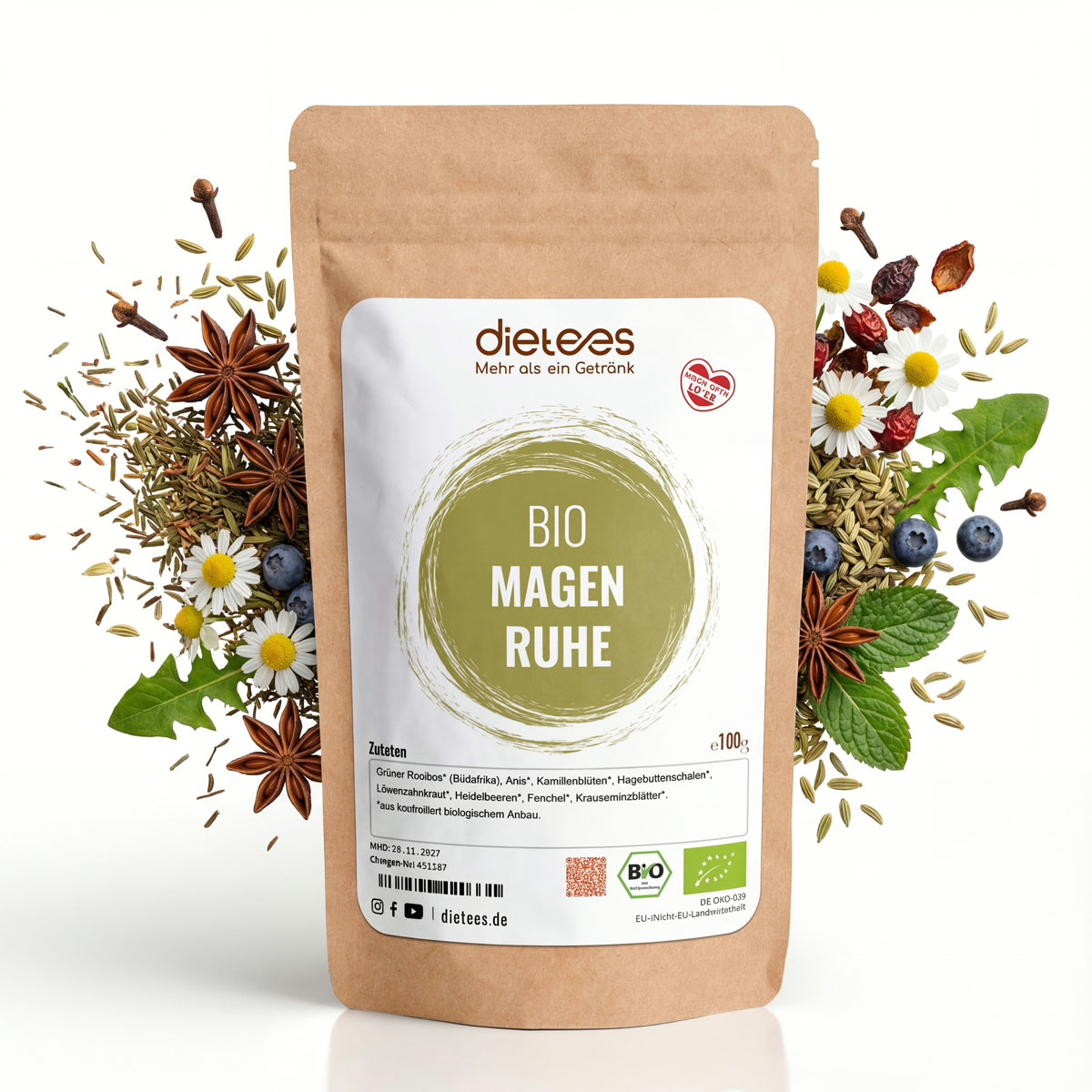
Organic Stomach Calm
A harmonious organic herbal tea with a delicate character – a carefully balanced herbal composition.
View product →Frequently asked questions
What does wormwood taste like in tea?
Wormwood has an intensely bitter, earthy-herbaceous aroma with spicy accents. It is one of the strongest bitter herbs in European tradition and has an unmistakable flavour.
How much wormwood should you use per cup?
½ to 1 teaspoon per 250 ml of water is a well-tested dosage. More is not advisable, as the aroma otherwise becomes very dominant. In tea blends, wormwood is used only as a flavour accent anyway.
Can wormwood tea be drunk daily?
As a treat, wormwood is not intended for ongoing, regular consumption in large amounts . If used at all, it should only be consumed occasionally and in small amounts. For prolonged or frequent use, please consult a doctor or pharmacist.
Can pregnant or breastfeeding women drink wormwood tea?
No. Wormwood is expressly not recommended during pregnancy and breastfeeding. It is also unsuitable for infants and children.
What does wormwood have to do with absinthe?
Wormwood is the namesake and one of the main ingredients of absinthe – a high-proof spirit that was especially popular in France and Switzerland in the 19th century. Today, wormwood is also used in a modern form in vermouth.
Does wormwood tea contain thujone?
Yes – wormwood naturally contains thujone, a secondary plant compound. Clear maximum levels for thujone apply to food and beverages in the EU. With sparing, occasional use as a tea, intake stays within the corresponding limits. For this reason, wormwood should not be consumed on an ongoing basis or in large amounts.
What does wormwood tea combine best with?
Classic pairings include mint, fennel, aniseed, citrus peel, yarrow, centaury, lemon balm and liquorice root. These companions balance the intense bitterness and make wormwood accessible even for less experienced bitter tea drinkers.
Is wormwood tea caffeine-free?
Yes – wormwood is a pure herbal product and naturally contains no caffeine. However, pay attention to the overall blend: if green tea, mate or black tea is added, the blend will contain caffeine.
⚠️ Important notes on consuming wormwood
Tea is a food and does not replace a balanced diet, a healthy lifestyle or medical treatment or advice. Wormwood should only be consumed in moderation and not on an ongoing basis . Wormwood naturally contains thujone – a secondary plant compound for which the EU sets maximum levels under food law. Not suitable for: pregnant or breastfeeding women, infants, children, people with stomach or gallbladder conditions, or those with sensitivities to plants in the daisy family. If you have health concerns, plan on prolonged use, or take medication, please consult your doctor or pharmacist before consumption.
Discover organic herbal teas with tradition
Experience the world of organic herbal teas at DieTees – carefully selected herbs from certified organic farming. 100% organic · Made in Germany · 30-day taste guarantee.
Discover organic herbal teas now → Tea is a food and does not replace a balanced diet.You might also like
Discover in the shop: all tea varieties view →